POLi mentions, deposits and withdrawals are assessed separately because a payment label alone does not establish availability.
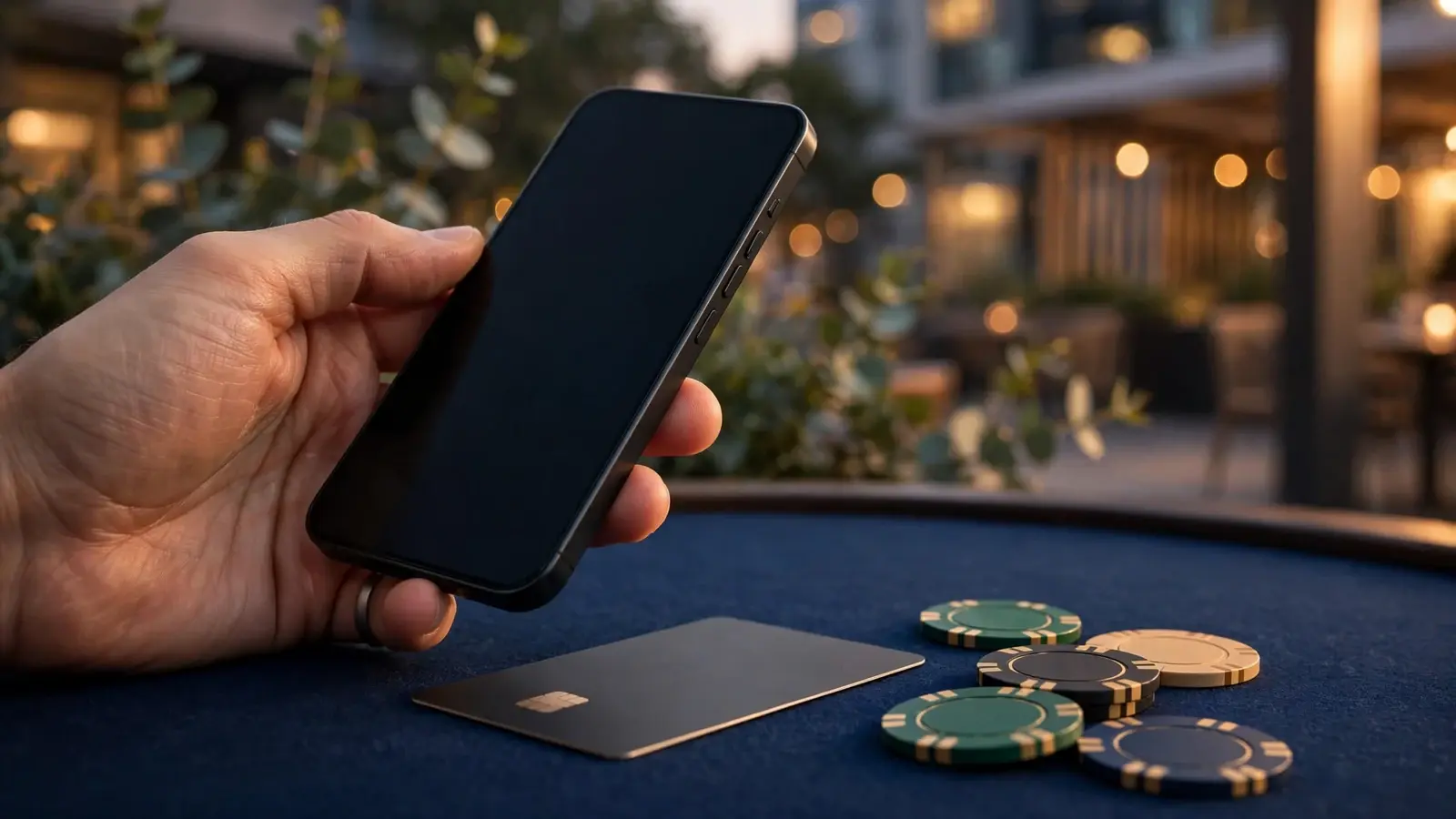
POLi and Online Pokies: What the Available Evidence Can Establish
A reference to POLi alongside online pokies combines two separate ideas: a payment method and a category of gambling product. The wording alone does not demonstrate that a particular service supports that method, nor that the method is available for a particular game. I treat those as distinct questions. Confusing them is how a broad label can start to sound like a confirmed feature.
The distinction matters because a payment name can appear in general information about a service without establishing what happens when someone tries to use it. Likewise, a site may describe games without saying anything reliable about its payment arrangements. Neither description, by itself, connects POLi to online pokies. That connection needs to be stated clearly and tied to the specific service being described.
The word “Australian” can also do more work in an advertisement than it appears to. It might refer to the intended audience, the currency displayed, or the language used; it does not, on its own, establish where an operator is based or what legal status it has. Those are separate claims. A polished local presentation is not proof that a gambling service is authorised to operate in Australia.
I have seen how feature labels can compress several conditions into one reassuring phrase. “Supports POLi” sounds definitive, but it leaves important distinctions unstated: whether the claim concerns a gambling account at all, whether it applies to the relevant product, and whether it describes an actual available service rather than a general payment reference. A label is not the same thing as a demonstrated connection. No flourish changes that.
This is particularly important when the product named is online casino gambling. Under the Interactive Gambling Act 2001, operators cannot provide real-money online casino games to people physically located in Australia. That category includes pokies as well as poker and table games. A payment claim cannot alter the legal character of the service it is attached to. Nor does describing a site as an Australian online casino make the underlying offer lawful.

The law is directed at operators, not at making a player’s use of an offshore site a criminal offence. That distinction should not be blurred into a suggestion that offshore play is protected or endorsed. Australian consumer law does not protect players who use offshore casinos. The Australian Communications and Media Authority is responsible for enforcing the Interactive Gambling Act, while the practical appearance of a payment option says nothing about that enforcement framework.
In editorial terms, I would separate three levels of statement. First, there is a general mention of POLi. Second, there is a claim that a named gambling service accepts it. Third, there is a claim that it is available in connection with a particular category of casino game for people in Australia. Each step adds a claim that needs its own basis. The first cannot be used as shorthand for the third.
That is why a list of “best” Australian POLi pokies would create a misleading impression. It would present a product recommendation and imply that the listed services are suitable, available, and linked to POLi. A payment word and a game label do not establish any of those things. In this market, that kind of presentation also risks turning information into promotion of a real-money interactive gambling service, which is not appropriate for Australian audiences.
 Casinos Accepting Tether USDT in Australia: What to VerifyLearn why a casino’s online presence or generic crypto wording does not establish USDT support or availability for Australian accounts.
 Osko Casino Sites in Australia: What Can Be ConfirmedLearn why an Osko label alone does not confirm Australian availability, and why deposits, withdrawals and current cashier terms must be checked…
The careful way to read such wording is therefore narrow. It may signal that a publisher is discussing payment methods and casino games in the same context. It does not, without a clear and reliable basis, prove compatibility between them. It also cannot serve as evidence that an offshore casino is lawful, locally protected, or an authorised option for Australian residents. Those are different matters, not fine print.
I keep the product question separate from the payment question. A discussion of pokies identifies a gambling category; a POLi reference identifies a payment claim. Combining the terms does not verify a working arrangement, and it does not make an unlawful operator acceptable. The distinction is plain. The implications are not.
Depositing with POLi: What Needs Checking Before a Payment
A deposit amount in a search phrase is not evidence of a minimum deposit. The same applies to a page that mentions a POLi deposit: that wording alone does not establish that POLi is available in a particular cashier, or that a particular amount will be accepted. Those are separate details, and neither can be inferred from the payment method’s name.
Attention: A deposit amount mentioned in a search phrase or on a page is not evidence of a minimum deposit or that a specific amount will be accepted via POLi.
I treat the cashier as the point where a payment claim has to become specific. Before any payment is submitted, the relevant details would need to appear in the operator’s own transaction flow: whether POLi is actually offered, which currency is shown, what amount is entered or selected, and whether any charge is disclosed. If those details are absent, unclear or inconsistent with the advertised claim, there is no sound basis for treating the payment as available on the stated terms.
That distinction matters for searches about depositing a small fixed amount. A figure typed into a search does not show whether it is a minimum, a suggested amount, an amount accepted by one operator, or simply a number repeated by another page. It also does not establish that the amount can be deposited through POLi rather than through a different method. The payment method and the amount must be confirmed together, in the same current transaction context.
What the cashier needs to make clear
A payment screen should identify the selected method and show the transaction details before submission. A method appearing in a general list is not necessarily available for every account or every transaction. A payment option can also be described on a page without appearing in the cashier at the point a deposit is being made. Those are not equivalent signals.
The amount field deserves the same care. A displayed minimum, if one is shown, is not automatically the amount that will be accepted for every payment method. Nor does a site-wide deposit statement necessarily apply to POLi. The relevant figure is the one presented for that specific method in the cashier, alongside the currency and any stated costs. If the screen does not make the terms legible before the payment is authorised, the amount should not be treated as confirmed.
 Casinos That Accept PayID in Australia: What to KnowLearn how to assess PayID claims, what deposit and withdrawal evidence is missing, and how Australia’s Interactive Gambling Act 2001 applies to…
 Casinos That Accept CashToCode in AustraliaLearn why a CashToCode brand mention does not prove casino cashier support or lawful availability, and how Australian payment habits offer context,…
Fees are another detail that should be visible before submission. A payment description by itself does not establish whether a charge applies. The cashier’s terms should say whether the amount entered is the amount to be debited or whether an additional cost may be added. If the transaction screen and the general payment information differ, the inconsistency is a reason to stop rather than guess which wording governs.
There is a practical reason operators separate these details. A payment method name attracts attention; transaction conditions determine what actually happens. Promotional language tends to lead with the first and leave the second for the cashier, the terms, or both. I have found that the unglamorous line beside the amount field is often more useful than the large payment-method badge. Small print matters.
Availability is not a deposit limit
The phrase “casino deposit by POLi” can mean several things in ordinary use: a site is said to support POLi, a cashier displays POLi, or a transaction has been completed using it. Those meanings should not be collapsed into one. A claim about acceptance does not settle the amount, currency, fees, account eligibility or the conditions attached to a deposit.
For the same reason, a statement that a casino accepts POLi does not establish a particular minimum deposit. It does not establish a maximum either. Those figures need to be stated by the operator for the relevant payment route; they cannot be calculated from the method’s name or carried over from another cashier. A fixed amount mentioned in a headline is not a substitute for a current transaction screen.
Do
- Verify the payment method and amount together in the current transaction context
- Check for required Know Your Customer (KYC) assessments before transacting
Don't
- Assume a fixed amount in a headline is a substitute for the transaction screen
- Infer deposit limits from the name of the payment method
Account checks can also affect when a financial transaction is permitted. Online casinos typically require customers to complete a Know Your Customer assessment before financial transactions. That requirement is distinct from the payment method and does not prove that a deposit route is available. It is one more condition that may matter before a transaction can proceed.
The Australian context
There is a more basic issue than the cashier’s wording. Under the Interactive Gambling Act 2001, it is illegal for operators to provide real-money online casino games, including pokies, to people physically located in Australia. The law concerns the operator’s provision of the service; it does not make an offshore casino offer lawful simply because a payment option is displayed.
Australian consumer law does not protect players who use offshore casinos. That leaves a significant gap if a payment is disputed or the operator does not honour its stated terms. A neat-looking deposit screen is not the same thing as Australian consumer protection.
So a POLi deposit amount should be treated as confirmed only when the operator’s own cashier clearly presents that method and the complete transaction terms before submission. A search phrase, a payment badge, or a stated amount elsewhere does not do that job.
Assessing Claims About Casinos That Accept POLi
This page is a reference point for readers researching casinos that accept POLi in Australia in 2026. Check directly with each casino whether POLi is currently available, and use the details below to assess the other information provided.
-
WinSpirit Casino
- License
- Curacao eGaming OGL/2024/923/0383 (Antillephone N.V.)
- Min. deposit
- A$30
WinSpirit Casino lists a Curacao eGaming licence, OGL/2024/923/0383, issued through Antillephone N.V. Its minimum deposit is A$30.
-
Golden Pokies
- License
- Curacao
Golden Pokies is listed with a Curacao licence. No other operator details are provided here.
-
Wild Tokyo
- License
- Curacao
- Payout speed
- crypto 30-60 minutes, fiat 1-5 days
- Min. deposit
- A$10
Wild Tokyo lists a Curacao licence and a A$10 minimum deposit. Its stated payout times are 30–60 minutes for crypto and 1–5 days for fiat.
-
MrPacho
- Payout speed
- crypto 30-120 minutes, fiat 24-72 hours
- Min. deposit
- A$30
MrPacho has a A$30 minimum deposit. Stated payout times are 30–120 minutes for crypto and 24–72 hours for fiat.
-
Bizzo Casino
- License
- Curacao Gaming Control Board (TechSolutions Group N.V.)
Bizzo Casino lists a Curacao Gaming Control Board licence, with TechSolutions Group N.V. named in connection with it. No other operator details are provided here.
-
GoldenCrown
- License
- Curacao Gaming Control Board OGL/2023/176/0095 (Hollycorn N.V.)
GoldenCrown lists Curacao Gaming Control Board licence OGL/2023/176/0095, associated with Hollycorn N.V. No other operator details are provided here.
-
Vegaz Casino
- License
- Curacao OGL/2024/1335/0780
- Min. deposit
- EUR 20
Vegaz Casino lists Curacao licence OGL/2024/1335/0780. Its minimum deposit is EUR 20.
-
Thor Casino
- License
- Curacao – Antillephone N.V. (Versus Odds B.V.)
- Min. deposit
- EUR 20
Thor Casino lists a Curacao licence through Antillephone N.V., with Versus Odds B.V. also named. Its minimum deposit is EUR 20.
-
Neospin
- License
- Curacao Gaming Control Board OGL/2023/176/0095 (Hollycorn N.V.)
Neospin lists Curacao Gaming Control Board licence OGL/2023/176/0095, associated with Hollycorn N.V. No other operator details are provided here.
-
SkyCrown
- License
- Tobique Gaming Commission
- Payout speed
- crypto ~10-15 minutes, fiat 1-5 days
- Min. deposit
- A$30
SkyCrown lists a Tobique Gaming Commission licence and a A$30 minimum deposit. Its stated payout times are about 10–15 minutes for crypto and 1–5 days for fiat.
A label such as “POLi casino” can sound like a clear description of a payment arrangement. In practice, it may be doing several jobs at once: suggesting that a casino accepts a particular payment method, implying that the service is available to Australians, or simply attaching a familiar name to an offer. Those are different claims. Treating them as interchangeable is where the wording becomes misleading.
I have seen payment badges treated as if they settle the question. They do not. A logo or a line in a promotional panel is an assertion by whoever published it; it is not, by itself, confirmation that a payment can be made through that method at a particular service. The distinction matters because an acceptance claim is specific to the operator, the customer’s location and the time at which the claim is made. A broad statement about “the best POLi casino sites” skips over all three.

Rankings add another layer. “Best” is not a payment feature. It is a judgement, and its meaning depends on the criteria behind it. A page may rank sites by design, game range, promotions or an editor’s own scoring system, then place a payment label beside the ranking. That layout can make the payment claim look like a tested qualification, even when the ranking and the payment information have been assembled separately. The label is doing more work than the evidence shown.
The word “instant” deserves particular care. It can refer to a payment being authorised, an account balance changing, or money reaching a bank account. Those are not the same event. A site described as an instant POLi casino could therefore be making a claim about one stage of a transaction while leaving the rest unstated. The phrase alone does not establish that the method is available, that a payment will succeed, or that funds will be received without delay.
Terms like "instant" can refer to different stages of a transaction, such as authorization, account balance changes, or money reaching a bank account, and do not prove the method is available.
A credible acceptance statement needs to be read narrowly. It should make clear which service is being described and whether the statement concerns deposits, withdrawals or both. A general claim that a casino “takes POLi” does not automatically cover every transaction direction or account. Nor does a page’s use of “POLi pokies” show that any particular game, payment route or operator has been checked. Broad wording is easy to publish; precise wording is more useful.
The same caution applies to claims about a POLi casino website being Australian. A page written for Australians, priced in Australian dollars or using Australian terminology does not, on its own, establish where the operator is based or what status it has. These are separate questions from whether a payment method is named. The Interactive Gambling Act 2001 makes it illegal for operators to provide real-money online casino games to people physically located in Australia. Australian consumer law does not protect players who use offshore casinos. A payment badge cannot change that position.
I do not treat a polished comparison table as independent proof merely because it looks orderly. A table can repeat an operator’s own wording, carry information from an earlier review or present a marketing label without explaining its basis. The useful signal is not the confidence of the design but the precision of the claim: what is said to be accepted, by whom, for which type of transaction, and in what context. If those details are blurred, the headline should be read as a broad assertion rather than a verified feature.

This is also why a list of “best POLi casino games” does not answer a question about payment acceptance. Games and payment facilities belong to different parts of a service. A catalogue of games, however extensive it appears, cannot substantiate a cashier claim. Likewise, a page naming a payment method does not establish that every casino service mentioned on that page supports it. Categories need to remain separate.
The strongest wording is modest and specific. It identifies the operator and the exact claim being made, rather than letting “best”, “instant” or “Australian” stand in for evidence. If a claim cannot be separated from those promotional words, its practical meaning is uncertain. That is a reason to withhold confidence, not to fill the gaps with assumptions. Short version: labels are not proof.
Instant POLi Withdrawals: What Can and Cannot Be Confirmed
“Instant” sounds like a definite service feature. In payment language, it is a claim about how quickly money reaches an account, not proof that a particular payment method is available for payouts. The word can describe a hoped-for result just as easily as an operator’s stated processing time. Those are not the same thing.
That means a claim combining POLi with “instant withdrawal” should not be treated as established simply because it appears in a heading, advert or cashier description. The wording needs to identify what the operator actually supports and what “instant” refers to. Without that distinction, the promise is difficult to assess.
The distinction matters because a payment method used to put funds into an account does not automatically work in reverse. A payout may be handled differently from a payment in, and the word “POLi” alone does not establish either direction. I have seen promotional language compress these separate questions into one neat label. It reads cleanly. It proves little.
Legal Risk
Under the Interactive Gambling Act 2001, operators are prohibited from providing real-money online casino games to people physically located in Australia.
“Real money” adds another expectation: that a user can fund an account, play and receive winnings through the named method. A phrase such as “instant POLi pokies” does not establish that chain. Nor does the addition of “new” or “no deposit” demonstrate that a service exists, that a payout route is available, or that a payment would be immediate. These are separate claims, not interchangeable descriptions.
A useful way to read the wording is to separate three ideas: whether POLi is named as a payment option, whether it is named for withdrawals, and whether a specific payout time is stated. One does not prove the others. Even a clear statement about withdrawal availability would not, on its own, establish that the transfer is instant. “Fast” is not a timestamp.
I would also treat “best” as promotional language rather than a measurable result unless the basis for comparison is made clear. A ranking cannot establish that a withdrawal method works, and a list of sites cannot substitute for an operator’s own current terms. The important distinction is between a claim about a method and evidence of the actual service being described.
The same caution applies when a bonus or a no-deposit offer appears beside a POLi payout claim. A promotion does not confirm how winnings can be withdrawn or when they would arrive. It may draw attention away from the separate payment conditions. Different questions. Different terms.
So a search for an instant POLi withdrawal casino expresses a specific expectation: POLi is supported for cashing out, and the payout is immediate. Neither part should be assumed from the phrase itself. A polished label can make both sound settled. It cannot make them so.

The Australian Rules Behind Offshore Online Casinos
An offshore website can be visible to Australians without being permitted to provide online casino services here. The key distinction is between the operator’s conduct and the player’s. Under the Interactive Gambling Act 2001, businesses are prohibited from offering real-money online casino games to people in Australia. The prohibition covers casino-style services; it is not a local authorisation scheme for overseas operators.
That distinction matters when a payment method appears in an advertisement or cashier. A reference to POLi, or to any other way of paying, does not change the legal status of the underlying service. Payment availability and permission to provide online casino gambling are separate questions. I would not treat a payment logo as evidence that an offshore casino is approved to operate for Australians. It says something about a claimed transaction route, not the operator’s legal standing.
The Act does not explicitly make an Australian player’s use of an offshore casino a criminal offence. That is not the same as saying the service is lawful, endorsed or protected. The legal prohibition is directed at operators providing the service to people in Australia. The Australian Communications and Media Authority (ACMA) oversees enforcement of the Act, so the rules are not simply a matter of terms written by a foreign website.
There is also a practical difference between being able to open a page and having a dependable remedy if something goes wrong. Australian consumer law does not protect players who use offshore casinos. A foreign operator’s own complaints process or stated terms are not a substitute for those protections. If a dispute arises over an account, funds or a refusal to honour a claim, the player may have limited practical recourse against a business operating beyond Australia’s consumer-protection framework.
Attention: Australian consumer law does not protect players who use offshore casinos, leaving a gap if a payment is disputed or terms are not honoured.
That is the part promotional language tends to blur. “Available to Australian players” describes an audience the site is willing to target; it does not establish that the site is legally entitled to offer casino gambling in Australia. “Australian casino” can likewise describe marketing, currency or intended audience without proving local authorisation. Neither phrase settles the legal question.
Conflating them makes a payment feature sound like a seal of approval. It is not.
For Australians encountering offshore casino offers, the practical point is therefore narrow but important: the Act prohibits operators from providing these services to people in Australia, while it does not explicitly criminalise the player for using an offshore site. At the same time, Australian consumer law does not protect someone who uses such a casino. Those statements can both be true. Legal exposure for the operator and consumer protection for the player are different issues.
Payment Choices in Australia and the POLi Evidence Gap
Australia’s everyday payment habits can make a casino payment page look familiar before it has established anything about a particular method. Contactless credit and debit cards are accepted almost everywhere in the country. Mobile wallets, including Google Pay and Apple Pay, are similarly widespread. People are also comfortable moving between cards, mobile wallets and services connected to bank accounts, such as PayPal.

That familiarity is useful context, but it is not evidence that POLi is available for casino transactions. A payment method’s place in ordinary commerce does not tell us whether a specific gambling service supports it, or whether a payment would be accepted in that setting. The distinction matters: broad familiarity describes how Australians pay in general; it does not verify a casino payment option.
I have seen payment language do a lot of work in a small space. A page may group cards, wallets and bank-linked services under a broad heading such as “popular options”. That can describe consumer recognition, not a confirmed connection between each method and the service being discussed. The wording sounds definitive. The operational detail may not be there.
The same caution applies when POLi appears beside casino games or pokies in a general description. A mention of POLi does not, on its own, show that the operator accepts it, that it is available to Australian customers, or that it can be used for a particular transaction. Nor does the common use of cards and mobile wallets fill in those blanks. They are separate payment channels, not evidence by association.

This is why a broad list of payment choices should be read as a description of the wider Australian environment, not as a guarantee about any casino. Cards and mobile wallets are familiar parts of daily spending. PayPal is another service people may use in connection with a bank account. Those facts explain why multiple payment methods are normal in Australia; they do not establish POLi support.
In commercial terms, “familiar” and “available” are different claims. The first concerns what consumers recognise or use across ordinary transactions. The second concerns a specific service and needs to be confirmed on its own terms. Treating one as proof of the other turns a general observation into a payment promise.
I would keep the distinction plain: Australian payment habits provide context, not confirmation. POLi cannot be inferred from the popularity of cards, wallets or bank-linked services. Separate claims need separate support. Familiarity is not acceptance.
What “Australian Casino” Means in a POLi Search
“ Australian casino” can describe the audience a page is written for, not the place an operator is based or the status of its service. The wording alone settles none of those points. Adding POLi to the phrase does not change that: it does not establish that a casino accepts POLi, that the operator is Australian, or that the service has any particular standing.
I learned to separate labels from operating details. A page can use Australian currency, refer to Australian players or discuss a familiar local payment method while leaving the operator’s location unclear. Those details may help explain the intended audience; they are not proof of where a business is established. “Australian” is a label, not a credential.
The same distinction applies to payment wording. A reference to POLi may be descriptive, promotional or simply part of a page title. Without a clear statement tied to the operator’s own current payment information, it should not be read as confirmation that POLi is available for that service. Familiarity with a payment method in Australia does not show that a particular casino supports it.
That difference matters because search wording compresses several separate claims into one phrase: intended market, operator identity, legal position and payment availability. Each needs its own evidence. One cannot be inferred from another. Neat wording. Separate questions.
There is also a practical limit to the label “Australian casino”. Real-money online casino games offered to people in Australia are prohibited under Australian law, and Australian consumer law does not protect players who use offshore casinos. A page aimed at Australians does not make an offshore service locally protected, nor does a local-sounding name establish Australian operation.

In my experience, the most useful reading is the narrow one: treat “Australian” as a description of the page’s intended audience unless reliable operator information establishes more. Treat “with POLi” as an acceptance claim that still needs to be verified, not as proof supplied by the phrase itself. This avoids turning a location cue into a status claim, or a payment reference into a confirmed feature.
POLi Withdrawals and the Difference Between Cashing Out and Paying In
A payment method used to put money into an account is not automatically available for taking money out. The two transactions move in opposite directions and may be governed by different rules. A POLi option associated with funding, for instance, would not by itself show that a casino can send winnings back through POLi.
That distinction is easy to lose in the phrase “POLi withdrawal”. It sounds like a single feature, but it combines two separate questions: whether POLi is available for deposits and whether it can receive a payout. One does not answer the other. The cashier’s wording and the operator’s payment terms would need to identify the withdrawal route, rather than leaving it to be inferred from a deposit option.
From the other side of the counter, payout methods are not simply a mirror image of payment methods. A site can treat incoming funds and outgoing funds differently, and its rules may specify how withdrawals are handled. The practical point is plain: a deposit label is not a cash-out promise.
No timing should be read into the word “POLi”, either. A method’s name alone does not establish when a withdrawal would be processed, whether an operator must first review it, or when funds would arrive. “Instant” is a marketing claim, not a transaction record. Without a clearly stated and applicable payout condition, a precise expectation would be guesswork.
How to read withdrawal claims
First, identify if the statement concerns paying in or receiving money. Then, look for explicit withdrawal wording and any attached conditions, as deposit support does not imply withdrawal support.
A useful way to read claims about a POLi casino withdrawal is to separate the stages. First, identify whether the statement concerns paying in or receiving money. Then look for explicit withdrawal wording and any conditions attached to it. If the wording only describes deposits, it says nothing about cashing out. If it promises a payout route or speed, that promise needs to be assessed on its own terms.
This is not a technicality. Confusing the direction of payment can make a service appear to offer more than its stated cashier actually does. Deposit support and withdrawal support are separate claims. Keep them separate.
Paying by POLi: Acceptance Is Not the Same as Availability
A payment method can be familiar in everyday banking and still be unavailable for a particular service. That distinction gets lost in phrases such as “pay with POLi”: the wording may describe an advertised option, a past offering or a general category, but it does not establish that a transaction can be completed now.
I have seen payment copy treated as if it were a live promise. It is not. Acceptance is specific to the operator, the customer’s location and the point at which a payment is attempted. A method’s name on a page does not, by itself, confirm that it appears in the relevant cashier, applies to an Australian account or will work with the customer’s bank. Those are separate questions, not details that can be inferred from a headline.
The reverse is also true. A search for a POLi casino payment method does not show that every service using similar wording supports the same process. Payment options can differ between providers and can change; broad labels often leave those distinctions unstated. “Available” is the important word. It refers to an option actually offered for that particular account and transaction, rather than a method mentioned in general promotional text.

There is a further boundary in Australia. The Interactive Gambling Act 2001 makes it illegal for operators to provide real-money online casino games to people in Australia. Australian consumer law does not protect players who use offshore casinos. A payment label does not alter either point or make an offshore service an Australian one.
From inside payment operations, the useful distinction is plain: a claim of acceptance is not confirmation of access. It says nothing by itself about account eligibility, whether a transaction can proceed, or what protections apply. Promotional wording often compresses those separate conditions into a short phrase. Read narrowly. No implied guarantee.
POLi Casino Bonuses and the Conditions That Cannot Be Assumed
A bonus described alongside POLi is not proof that a promotion exists, that POLi qualifies as a payment method, or that any particular terms apply. The label can blur separate questions: whether a promotion is being offered, who may qualify, and which payment methods count under its rules. Those details cannot be inferred from the wording alone.
I have seen promotional language do more work than the conditions beneath it. “POLi bonus” sounds like a clear link between a payment method and a reward; in practice, that phrase does not establish a deposit requirement, eligibility rule, or withdrawal condition. None should be assumed without current, specific terms. A general bonus page would not settle whether its conditions apply to a POLi transaction.
There is a more basic issue in Australia. Real-money online casino games offered to people in the country are prohibited under the Interactive Gambling Act 2001. A promotional claim does not change that position or make an offshore casino an authorised local service. Australian consumer law does not protect players who use offshore casinos.
That distinction matters because bonus wording can make an offer look settled before its status and terms have been established. “Exclusive” is advertising language, not evidence of a POLi-specific benefit. The headline is not the condition.
So a claim about a POLi-linked casino bonus should not be treated as a promise of extra funds or as confirmation that a payment qualifies. Without clear, applicable terms, the actual benefit and obligations remain uncertain. No assumption is warranted.
Are casino Amex payments instant?
Yes, Amex deposits at casinos are processed instantly. Withdrawals can take up to five days to clear.
How can I know if an online casino will accept American Express?
Check the casino’s cashier for American Express as an available deposit method. Some casinos do not accept Amex, and a payment may also be blocked by the card issuer.
Are there fees for using Amex at online casinos?
Amex deposits are typically free, but a casino may charge a 1.5% surcharge, and currency conversion can incur a 3% fee. Withdrawal fees may also apply, depending on the casino.
What are the deposit and withdrawal limits at the best Amex casinos?
Each casino sets its own Amex deposit and withdrawal limits, so they can vary. Check the cashier for the limits that apply to the casino and transaction.
How do you check if casino sites accept Amex deposits?
Look for American Express in the casino’s cashier and confirm it is available for your account before submitting a payment. Enter the amount in AUD and review any disclosed charges.
Are there any fees associated with using American Express at online casinos?
Deposits are typically fee-free, but a casino may add a 1.5% surcharge, and currency conversion can incur a 3% fee. Withdrawal fees may apply depending on the casino.