RTP is a long-run theoretical measure, while short sessions vary and game titles may not reveal the setting in use.

What “Best-Paying” Can—and Can’t—Tell You About South Australian Pokies
“Best-paying” sounds like a settled comparison: one pokie returns more, so it must be the better choice. In practice, the phrase leaves out two separate questions. What return setting is in use, and what can that setting tell anyone about an individual result? Neither question identifies a reliable winner.
Return to player, or RTP, is a theoretical measure of the share of wagers a game is designed to return over a very large number of plays. It is not a forecast for a particular session, nor a promise that a player will receive a stated share back. A result over a short stretch can sit far from the theoretical figure. That difference is not evidence that the next spin is due to compensate for earlier losses.
There is another complication behind comparisons of South Australian pokies. A specialist review reports that some game providers allow casinos to choose among multiple RTP settings for the same pokie. If that applies, the game title alone does not establish which return percentage is configured at a particular casino. A figure attached to a game in one context may not describe the setting used elsewhere.
Choosing an online pokies site in South Australia means checking the practical details that are available before you play. This list gives a concise reference point for each option, including licensing and payment information where provided.
-
WinSpirit Casino
- License
- Curacao eGaming OGL/2024/923/0383 (Antillephone N.V.)
- Min. deposit
- A$30
WinSpirit Casino lists a Curaçao eGaming licence, OGL/2024/923/0383, issued through Antillephone N.V. Its minimum deposit is A$30.
-
Golden Pokies
- License
- Curacao
Golden Pokies is listed as holding a Curaçao licence. No other operator details are provided here.
-
Wild Tokyo
- License
- Curacao
- Payout speed
- crypto 30-60 minutes, fiat 1-5 days
- Min. deposit
- A$10
Wild Tokyo lists a Curaçao licence and a minimum deposit of A$10. Its stated payout times are 30–60 minutes for crypto and 1–5 days for fiat.
-
MrPacho
- Payout speed
- crypto 30-120 minutes, fiat 24-72 hours
- Min. deposit
- A$30
MrPacho has a minimum deposit of A$30. Its stated payout times are 30–120 minutes for crypto and 24–72 hours for fiat.
-
Bizzo Casino
- License
- Curacao Gaming Control Board (TechSolutions Group N.V.)
Bizzo Casino lists a licence from the Curaçao Gaming Control Board, with TechSolutions Group N.V. identified.
-
GoldenCrown
- License
- Curacao Gaming Control Board OGL/2023/176/0095 (Hollycorn N.V.)
GoldenCrown lists a Curaçao Gaming Control Board licence, OGL/2023/176/0095, held by Hollycorn N.V.
-
Vegaz Casino
- License
- Curacao OGL/2024/1335/0780
- Min. deposit
- EUR 20
Vegaz Casino lists a Curaçao licence, OGL/2024/1335/0780. Its minimum deposit is EUR 20.
-
Thor Casino
- License
- Curacao – Antillephone N.V. (Versus Odds B.V.)
- Min. deposit
- EUR 20
Thor Casino lists a Curaçao licence through Antillephone N.V., with Versus Odds B.V. identified. Its minimum deposit is EUR 20.
-
Neospin
- License
- Curacao Gaming Control Board OGL/2023/176/0095 (Hollycorn N.V.)
Neospin lists a Curaçao Gaming Control Board licence, OGL/2023/176/0095, held by Hollycorn N.V.
-
SkyCrown
- License
- Tobique Gaming Commission
- Payout speed
- crypto ~10-15 minutes, fiat 1-5 days
- Min. deposit
- A$30
SkyCrown lists a Tobique Gaming Commission licence and a minimum deposit of A$30. Its stated payout times are around 10–15 minutes for crypto and 1–5 days for fiat.
That point is easy to miss because promotional wording tends to make a game sound like a fixed product. “High return” can be read as a property that follows the title everywhere. But where settings can vary, the relevant figure is tied to the configuration, not simply the name on the screen. Without dependable information about the setting in use, a comparison based on published figures may not compare like with like.
Even a confirmed RTP setting has limits. It describes a long-run mathematical expectation, not the outcome of a visit, a sequence of spins or a particular stake. The figure does not say when a return will occur, how large any individual win might be, or whether a player will finish ahead. It also does not turn a higher theoretical return into a dependable way of making money.
I have seen how a single percentage can carry more weight in a sales conversation than it can bear. It is neat, easy to put beside another figure, and reassuringly precise. But precision about a theoretical model is not precision about a future result. The gap matters.
For anyone comparing claims about the best-paying pokies in South Australia, the practical test is not whether a page uses a confident label. It is whether the RTP figure is linked to the actual setting and explained as a long-run measure. If either part is unclear, the claim cannot support a meaningful comparison. That still does not produce a list of the best machines or venues; it only clarifies what a return figure can and cannot establish.
RTP is also not the same thing as volatility. RTP concerns theoretical overall return across extensive play. Volatility describes how wins may be distributed, such as whether they tend to occur more often in smaller amounts or less often in larger ones. A game with a stated return figure does not, from that figure alone, reveal the pattern of results a player will experience. Nor does a comparison of return settings establish which game will suit a particular person.
The underlying spin is determined by a Random Number Generator, and each spin is an independent event. A run of losses does not make a win more likely on the next spin; a recent win does not make another one less likely. That is why past results and stories about a machine “paying” cannot verify its setting or predict its next outcome. The screen may show a sequence. The sequence is not a schedule.
This is relevant whether someone is considering a venue in Adelaide or elsewhere in the state. A general claim about South Australia casino pokies cannot establish that every location uses an identical setting, and a setting comparison cannot identify the best pokies in a South Australian CBD venue. Those are venue-level questions, not conclusions that follow from a game’s name or an RTP label.
The same distinction applies to claims that one pokie is “due” or that a machine has been “hot.” Those descriptions may reflect recent results, but they do not alter the independent nature of the next spin. A person can observe what has happened; observation does not provide a reliable winning pattern.
Attention: A theoretical RTP figure does not guarantee a personal return, settle which venue is best, or predict the outcome of a specific session.
So “best-paying” is useful only when treated as a narrow claim about a specified theoretical setting, with its limits made clear. It cannot promise a personal return, settle which venue is best, or show what will happen next. The wording is larger than the evidence. A setting is not a forecast.
When South Australian Gaming Venues Are Open, the Rules Still Apply
An open venue and operating pokies are not quite the same thing. A hotel, club or other gaming venue can have its doors open while the machines are not in use; the relevant responsibility described for larger venues attaches to the period when the machines are operating. That distinction matters when checking whether a venue is open now: a general opening notice does not, by itself, establish that its gaming area is operating at that moment.
I have seen the word “open” do too much work in venue descriptions. It can refer to the building, food service, a bar or a gaming area, and those are not interchangeable. For someone trying to establish whether pokies are available early, late or at a particular time, the useful detail is the venue’s own current information, not an assumption drawn from the fact that the premises are open. The rules for staff on duty concern operation of the machines, rather than a promise of access at a particular hour.
A report published by regionriverina.com.au describes a requirement taking effect from 1 July: a venue operating more than 20 gaming machines is to have a dedicated responsible gambling officer, or RGO, present while those machines are running. The practical point is the link between the officer’s duty and machine operation. It is not simply a staffing condition for every hour the venue is open, nor does it state when any particular South Australian venue starts or stops operating its pokies.

That difference is useful when reading a venue notice. A venue may publish its overall business hours, but the RGO requirement described in the report applies during gaming-machine operation at venues above the stated machine threshold. The obligation is not evidence that a venue has machines running at all times, and it cannot be used to infer that a venue is open at dawn or late at night. The schedule still belongs to the individual venue.
The same report says venues are allowed a one-month grace period to take down relevant signage and put the responsible gambling officer arrangements in place. That transition period is part of how the change is introduced; it is not an extra period of operating hours or a general exemption from responsible conduct. The wording matters. A grace period for implementing a requirement does not mean that gaming areas have a newly guaranteed schedule, or that all venues are in the same position at the same time.
There is also an incident-recording duty in the reported changes. Venues are to maintain a gambling incident register, with entries for events that include a patron showing signs of being at risk of gambling harm or already affected by it. In operational terms, that makes the duty more than a matter of having a person on the floor: relevant incidents are also to be recorded. The register is an internal record of occurrences, not a public timetable and not a listing of which venues are open.
Venues operating more than 20 gaming machines are required to have a dedicated responsible gambling officer (RGO) present while those machines are running.
I have found that this is where promotional language can blur the useful distinction. “Open” is a statement about access to premises; “gaming available” is a statement about the machines. Neither phrase should be treated as confirmation of the other unless the venue states it clearly. The officer requirement described in the regional report is tied to the latter. It establishes a responsibility during operation, not an assurance of continuous operation.
For people comparing opening information, the practical approach is to separate three details: whether the venue is open, whether its gaming machines are operating, and whether the venue’s obligations apply during that operation. The first two are venue-specific matters. The third is the responsibility described in the report for qualifying venues. A broad claim that a place is open now cannot answer all three.
That is a narrower, more reliable reading than treating “open” as a single status. A published venue schedule can change, and a general business listing may not distinguish gaming hours from the rest of the premises. Where the exact status matters, current confirmation from the venue is the relevant check; the regulatory duties do not supply a live opening update.
The officer and incident-register requirements also explain why opening information should not be mistaken for a complete account of how a gaming area is managed. They describe duties connected to operation and the handling of gambling-related concerns. They do not identify a particular venue, certify its current staffing, or establish that its machines are available at a given time. Those are separate operational details.
For South Australian venues, the phrase “open now” therefore needs a precise meaning. A building may be open while pokies are not operating, and the stated RGO duty is triggered by machines being in operation at qualifying venues. The report’s transition period and record-keeping requirement add context to venue responsibilities, but neither supplies an opening schedule. Clear distinction.
Finding Pokies Near an Airport or Other South Australian Landmarks
A venue’s proximity to an airport, the Adelaide CBD or a state border is a matter of address and distance, not a quality that can be inferred from the word “South Australian”. The same applies to searches for pokies near a central district, in northern South Australia or beside a particular landmark. Without a confirmed venue address and a measured route, a claim of nearness has no useful geographic meaning.
I have seen location language do quiet work in gambling promotions. “Near the airport” can sound like a simple convenience, but it leaves out the detail that matters: which airport, which entrance, and how the distance is being measured. Straight-line distance and a road journey are not interchangeable. Neither tells a person whether the venue is accessible from a terminal or located in the airport itself.
The phrase “pokies at the airport” is more specific than “pokies near an airport”. It suggests a venue inside airport grounds, rather than somewhere in the surrounding area. Those are different claims and should not be blurred together. A place name attached to a listing is not, by itself, proof that gaming machines operate at the airport.
The same care applies to the CBD. “Central” may describe a broad urban area, while “in the CBD” implies a more definite location. A venue can be described as being in a city without being within its central business district. For a useful comparison, the exact street address and a clearly stated distance or route are needed. Labels alone are not enough.
Border searches also need a defined starting point. “Near Victoria”, for instance, could refer to a town in South Australia, a route approaching the border or a venue across the state line. The wording does not establish which one. North and central are similarly broad directions: they do not identify a town, a boundary or a particular premises.
A search for pokies “near me” adds another ambiguity. “Near” depends on the location being used and on whether distance means a short walk, a drive or simply the same general district. A result can appear relevant because it shares a regional label, while still being far from the place intended. Search placement is not a measurement.
When checking a location claim, the useful particulars are the venue’s current street address, the landmark being used as a reference, and the method for calculating distance. A route should be distinguished from a straight-line measurement, and an airport venue should be distinguished from a venue in the wider airport area. If those details are not stated, the wording should be treated as broad description, not precise directions.
This distinction matters because location language can be mistaken for confirmation. “Near the CBD” does not establish a specific distance; “at the airport” does not follow from a mention of the airport; and a reference to a state border does not show which side of it a venue occupies. Geography first. Labels second.
Online Pokies and Deposits: The Legal Position for Australians
The legal distinction is between the company providing an online casino and the person using it. Under the Interactive Gambling Act 2001, operators cannot legally offer real-money online pokies to people in Australia without a domestic licence. No Australian licence has been issued for online casinos, so there is no Australian-licensed casino for real-money play.
That point can be obscured by familiar casino language. “Available to Australians” may describe a site’s own acceptance policy; it does not mean the service is licensed here. Nor does a deposit option, a bonus or a high betting limit change the legal position. A payment feature answers how money might be transferred, not whether the operator is authorised to provide online casino games in Australia.
The Act is directed at operators, rather than making individual players liable simply for playing on an offshore service. That distinction matters, but it is not an endorsement or a guarantee of access. Australian authorities block illegal offshore gambling sites, and access can be disrupted. A site that accepts an account or deposit is not thereby made lawful in Australia.
From the other side of the counter, the practical gap is easy to miss: the operator controls the account and the terms, while the player may have little meaningful protection if a dispute arises. If an offshore casino refuses to pay winnings, Australian players have no legal recourse in Australia to recover them. A promise displayed on a site is not the same thing as an enforceable local remedy. That is the cost hidden behind the word “offshore”.
Searches for South Australian online pokies, real-money play or a no-deposit bonus can make the issue sound like a choice between offers. Legally, those labels do not create an exception. Whether a promotion requires a deposit or advertises free play, it does not supply the missing Australian licence. The same applies to claims about high limits or maximum bets: those are terms set by an operator, not evidence of domestic authorisation.
Legal Risk
Under the Interactive Gambling Act 2001, there are no Australian-licensed online casinos for real-money play, and users of offshore sites have no legal recourse in Australia to recover winnings.
For a South Australian looking for casino-style online play, the central fact is therefore not the advertised game selection or payment route. It is that Australia has no licensed online casino, and the law prohibits operators from providing real-money casino games to people in the country. Offshore services may present themselves as open to Australian customers, but that does not provide the protections of a locally licensed casino, and access may be blocked.
A deposit is not a licence. A bonus is not protection.
South Australian Pokies Venues and Their On-Site Responsibilities
A venue’s obligations around pokies are about more than the machines themselves. On-site safeguards shape how gambling is accessed and how a person can limit their play. They do not establish that a venue is “best”, or that its machines offer better outcomes. Those are different claims.
The minimum legal age for gambling in Australia is 18, including for pokies. This is a threshold for access, not a measure of whether gambling is suitable for someone. Age checks and entry procedures are practical controls: they help prevent underage participation, but they cannot tell a venue whether an adult is experiencing harm.
The more useful measure of a venue’s approach is whether tools are available to interrupt or constrain play. Standard responsible-gambling options include deposit limits, loss limits and session time limits. Each works on a different part of the decision. A deposit limit restricts money put into an account or play arrangement; a loss limit sets a boundary on losses; a session time limit puts a boundary around duration. The details and implementation matter. A tool that is difficult to find or understand has less practical value than one presented clearly.

Self-exclusion is another standard option. It is designed to let a person bar themselves from gambling, rather than rely on a moment-to-moment decision to stop. It is a serious boundary, not a promotional feature. Its usefulness depends on the process being clear and on the venue applying it as intended. No single tool makes gambling risk-free, and setting a limit does not change the chance of a particular spin paying.
From the other side of the counter, the distinction between a safeguard and a sales message is easy to miss in polished venue language. “Play your way” can sound like control; what matters is whether a limit can actually be set and whether the exclusion process is usable. Presentation is not the safeguard. The working mechanism is.
A venue overview should therefore be read as a description of access and controls, not as a verdict on the quality of its pokies. The phrase “best pokies venue” has no reliable meaning without a defined measure, and responsible-gambling tools do not rank venues by payout or entertainment value. A venue’s safeguards can be relevant to a decision, but they cannot predict the result of play.
For South Australian venues, the same basic distinction applies whether the setting is a club, hotel or another place with pokies: the age threshold and harm-minimisation tools concern participation, not winning. A responsible approach is not a promise that losses will be prevented. It is a set of boundaries that can help make gambling more manageable, alongside the recognition that a person may need to stop altogether.
Do
- Use deposit, loss, and session time limits
- Utilise self-exclusion tools
- Verify the usable mechanism of safeguards
Don't
- Rely on promotional phrasing like "play your way"
- Assume tools make gambling risk-free
- Confuse safeguards with payout guarantees
Limits help. They do not guarantee control.
Why “24-Hour Pokies” Is Not the Same as Verified Opening Hours
“24-hour pokies” describes a hoped-for kind of access, not proof that a particular South Australian venue is open around the clock. The distinction matters: a phrase attached to a venue can sound like a confirmed schedule even when it does not identify the hours of a specific premises or say whether its gaming-machine area is operating.
I have seen how easily a broad label gets treated as an operational fact. It is not one. A venue’s general trading hours and the hours when pokies are available are separate details. Even a venue that is open does not, by that fact alone, establish that its gaming machines are operating at that moment. Each claim needs its own current, venue-specific confirmation.
That is why “open now” needs more than a general description. It is a time-sensitive statement about a named place at a particular moment. Without a live schedule or direct confirmation for that venue, a round-the-clock label cannot settle it. Nor does the label establish that all venues in South Australia follow the same timetable.
The same caution applies to South Australia pokies opening hours as a broad topic. A state-wide phrase does not supply a schedule for individual venues. Opening times can only be meaningfully checked against the premises concerned and the date in question; a general page or old listing may not reflect current operations. No useful conclusion follows from treating a search result’s wording as a live status update.
The practical reading is narrow. “Open 24 hours” would need to refer to a particular venue and be supported by current information about both its general access and its gaming-machine operations. Without those details, it remains a claim to verify, not a dependable answer to whether pokies are available at any given hour.
There is also a difference between an establishment being described as open and a verified schedule showing when its machines operate. Those are not interchangeable statements. A listing can omit the distinction, while a casual description can make it sound as though access is continuous. The wording may be broad; the evidence required is specific.
In my experience, the cleanest way to read any hours claim is to ask what it actually covers: the venue, the gaming area, or neither in a current and precise sense. If that scope is unclear, the claim cannot establish round-the-clock availability. Search wording is not a timetable.
Crown Casino Searches and What Can Be Verified About South Australia
A Crown-related search does not, by itself, establish that Crown operates a casino in South Australia or that South Australian venues have Crown pokies. A familiar brand name can pull together results about different places, businesses or kinds of gambling. Those are not interchangeable. The name alone is not evidence of a local venue, a particular gaming area or a machine being available there.
I have seen how easily a broad venue label gets repeated as if it were a checked detail. It is not. To make a claim about pokies at a South Australian Crown casino, there would need to be an identifiable South Australian venue and information tying the machines to it. Without that, naming a “Crown pokies room” would turn an association into a fact. That is a poor basis for choosing where to go.
The same distinction applies to a request for the best pokies room in South Australia. “Best” might refer to the room, the range of machines, the service or the prospect of a payout. Those are separate claims, and none follows from a casino brand appearing alongside a state name. A venue label does not establish which machines are on site, how they are configured or what a particular player will receive.
Maximum cash payout is another phrase that needs a defined subject. A maximum might refer to a machine’s stated prize, a venue’s payment process or a withdrawal condition. They are not the same thing. Without a named machine and a verifiable rule governing the relevant payment, a number would create false precision. A large-sounding figure in promotional language would not settle how or when a particular win is paid.
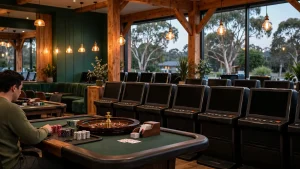
There is also a legal distinction between a physical venue and an online casino. Under the Interactive Gambling Act 2001, operators cannot provide real-money online casino games, including pokies, to people in Australia; no Australian online casino licences have been issued. A Crown-branded result online should not be treated as evidence of an authorised Australian casino service. ACMA enforces the law and blocks access to illegal offshore gambling sites.
The careful reading is narrow: a Crown association does not prove South Australian operations, local pokies or a maximum payout. No leap from name to venue.
CBD Clubs, Gaming Machines and the Limits of Venue-Level Claims
A club’s name, location or gaming-machine area does not establish that its pokies are “best”. That label needs evidence tied to the particular machines and their settings; a general description of a club cannot supply it. Nor does a rule that applies across gambling venues tell us which clubs in a South Australian CBD have machines, how many they have, or what safeguards operate at each site.
The broader rules do establish a baseline. The legal age for gambling in Australia, including pokies, is 18. Deposit and loss limits, session time limits and self-exclusion are recognised responsible-gambling tools. These describe measures that can help manage gambling; they are not proof that a particular club offers each measure in a particular form. The distinction matters. A general safeguard is not a venue-level inspection.
Self-exclusion is often treated as a simple label, but it is a practical restriction on access, not a claim about a machine’s odds or the quality of a club. Its existence in the set of standard harm-minimisation tools does not identify which venues offer it, how it is administered, or whether it covers every setting in which a person might gamble. No shortcut there.
The same caution applies to machine counts. A threshold in a venue rule, where one applies, cannot be used to infer how many machines a named club has. Counts require venue-specific information, and a count alone would still say nothing about a pokie’s return setting or a player’s likely outcome. I have seen marketing turn one measurable detail into a broad claim of quality. It remains one detail.

For South Australian clubs, the defensible distinction is between what the general framework says and what must be established about an individual venue. The framework sets the minimum age and recognises tools such as limits and self-exclusion. It does not produce a directory, a ranking, or a report card for CBD clubs. Without venue-level evidence, naming a club as a leading pokies destination would give certainty the underlying information does not support.
That is why “best” should be read carefully in club descriptions. It may be promotional shorthand, not a verified comparison of machines or safeguards. Rules set a floor. They do not rank venues.
Cashless Pokies and Newcastle Searches: Two Claims the Evidence Doesn’t Settle
“Cashless” describes how money is loaded, stored or wagered at a machine. It is not another name for a bank transfer. A venue could accept electronic payments at a counter without its pokies being cashless; equally, a cashless system would need to be assessed by how the machines themselves handle funds. The payment route alone tells little about the machine.
PayID sits on Australia’s New Payments Platform. It lets a payment be directed using an email address, mobile number or ABN, with the transfer connected to a bank account. That makes it a bank-transfer method, not proof that a pokie accepts cashless play. Nor does a PayID payment establish that an online operator is licensed, that a game is fair or that its return settings are transparent. Different claims require different evidence.
That distinction matters because payment language is often used loosely. “Instant” or “cashless” can sound like a description of the whole gambling experience when it may refer only to moving money between accounts. A label is not a technical specification. Plain mechanics.
The Newcastle wording also needs care. Newcastle is a city in New South Wales, so “Newcastle, South Australia” does not identify a South Australian venue by itself. A city name in a listing is not a substitute for a state and street address; without those, the location cannot be reliably matched to a South Australian pokie venue. “Best” adds another unresolved claim: it could mean machine selection, venue facilities, accessibility or something else entirely. Those are not interchangeable measures.
I have seen payment terminology do too much work in promotional copy. A transfer option can describe how funds move; it cannot establish what equipment is on a gaming floor or where a venue is. For South Australian cashless-pokies claims, the relevant question is whether the particular venue’s machines support cashless wagering—not whether a payment service is available elsewhere in the transaction.
South Australian Pokies: Random Outcomes, Not a Reliable Winning Pattern
A run of wins can look like a pattern. So can a run of losses. From the player’s side of the machine, both can invite the same mistake: treating what has already happened as a clue to what must happen next.
That is not how an individual spin works. A pokie’s Random Number Generator determines the result, and each spin is independent of the one before it. A loss does not make a win “due”; a recent win does not mean another is more likely. The previous result belongs to the past, not to the next spin.
I have seen how easily streaks become stories. A player remembers a machine paying several times in a short stretch, then reads the next quiet spell as a temporary pause. Another sees repeated losses and expects the machine to turn around. Neither interpretation gives a dependable forecast. Random outcomes can form clusters that feel meaningful without creating a usable signal.
That distinction matters when people talk about the best pokies in South Australia. A memorable session may be real, but it cannot establish a reliable winning pattern for later sessions, or for someone else using the same machine. A past result is not a promise, and a sequence is not a system.
The practical limit is simple: there is no pattern in previous spins that can tell a player what the next one will produce. This does not mean every pokie has identical settings; it means the outcome of a particular spin cannot be read from the sequence that came before it. Those are different questions.
South Australian pokies are no exception to that basic mechanic. Looking for a streak may make random results feel easier to explain. It does not make them easier to predict. No dependable signal.
Are online pokies legal for Australian players?
Australian-licensed online casinos do not exist, and offering real-money online pokies to Australians without a domestic licence is illegal for operators. Australian players can legally play on offshore sites that accept them, but they have no legal recourse in Australia if a site refuses to pay.
What is the legal age for online gambling in Australia?
You must be at least 18 to gamble online in Australia.
Do PayID deposits qualify for bonuses?
Yes, PayID is treated like any other qualifying deposit method at recommended sites.
What is the cost-benefit calculation of casino promotions?
Compare the wagering requirement and any cash-out or withdrawal limits with the bonus value. For example, a $500 bonus with 40x wagering requires $20,000 in bets before winnings can be withdrawn; if wagering applies to a $500 deposit plus a $500 bonus at 35x, it requires $35,000 in bets.
Can casinos change the RTP of their games?
Some game providers let casinos choose between multiple RTP settings for the same pokie, so the same game can have different return percentages at different casinos.