Map pins, opening-time snippets and machine settings each have limits when assessing Sydney pokies venues.
What “Near Me” Can—and Cannot—Tell You
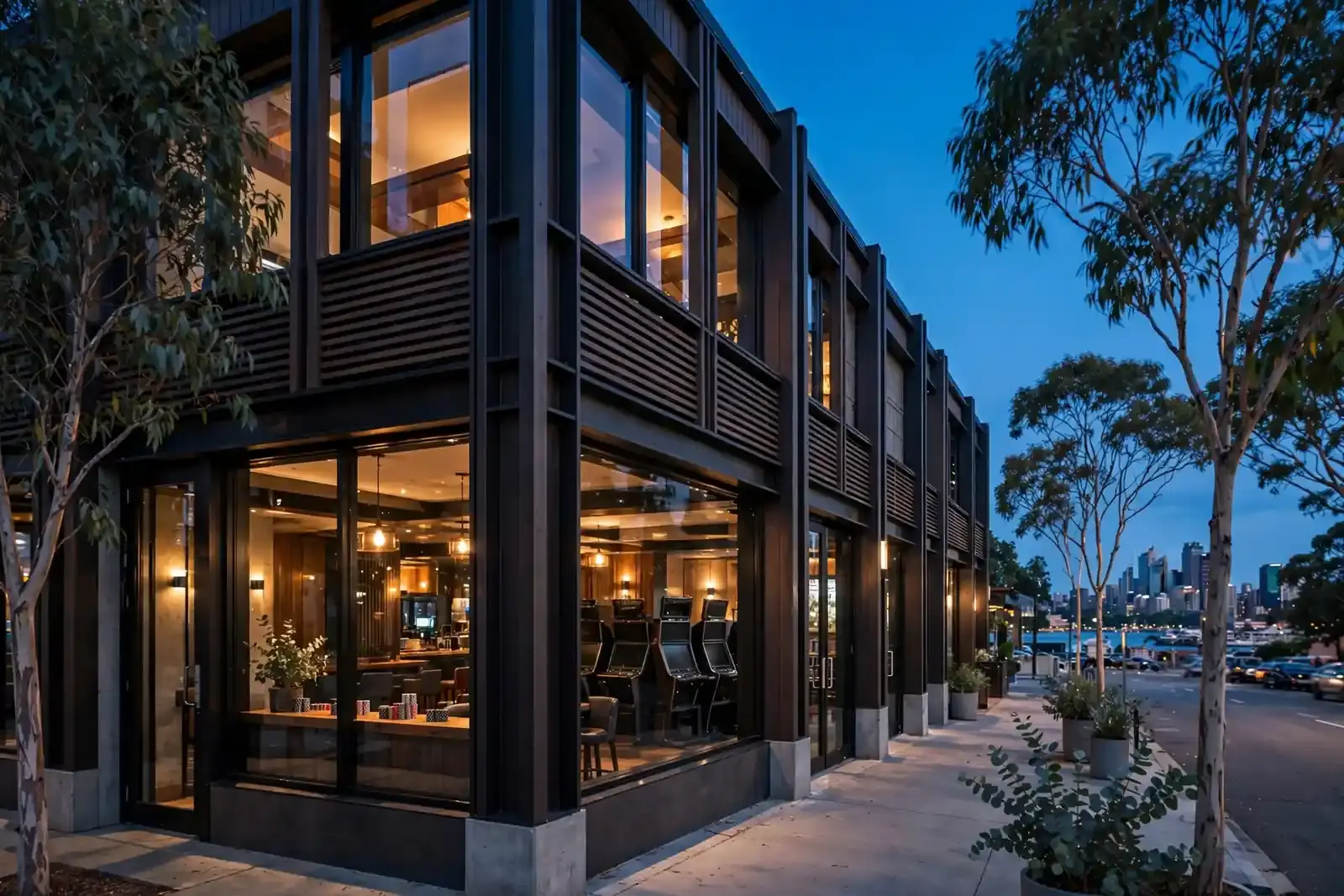
A search for pokies near Sydney can make a result look more definite than it is. The phrase “near me” describes a location-based intention; it does not certify the place shown. A map pin or business listing is a pointer to investigate, not proof that a venue exists at that address, has pokies, or is open to the public.
I learned to separate the label from the underlying fact. A listing can be categorised broadly, use a name that suggests gaming, or appear because the search system associates it with a nearby area. None of those signals, alone, establishes that pokies are installed there. Even a result that looks precise on a map may need confirmation from the venue itself.
The same distinction applies to a search centred on Sydney rather than a person’s exact location. “Near Sydney” can encompass a wide area, while a searcher may have a much narrower destination in mind. “Near the CBD” and “near Central” also describe different reference points, and a search engine may interpret each according to its own location data. The wording narrows the intention; it does not settle the venue’s identity.
Choosing a pokies site in Sydney for 2026 means looking beyond the games to practical details such as licensing, deposit requirements and withdrawal options. Use these brief verdicts as a starting point when deciding what to check for yourself.
-
WinSpirit Casino
- License
- Curacao eGaming OGL/2024/923/0383 (Antillephone N.V.)
- Min. deposit
- A$30
WinSpirit Casino lists a Curacao eGaming licence, OGL/2024/923/0383, issued through Antillephone N.V. Its minimum deposit is A$30.
-
Golden Pokies
- License
- Curacao
Golden Pokies is listed with a Curacao licence. No further operator details are provided here, so check its terms and other key details before choosing.
-
Wild Tokyo
- License
- Curacao
- Payout speed
- crypto 30-60 minutes, fiat 1-5 days
- Min. deposit
- A$10
Wild Tokyo lists a Curacao licence and a minimum deposit of A$10. Its stated payout times are 30–60 minutes for crypto and 1–5 days for fiat.
-
MrPacho
- Payout speed
- crypto 30-120 minutes, fiat 24-72 hours
- Min. deposit
- A$30
MrPacho lists a minimum deposit of A$30. Its stated payout times are 30–120 minutes for crypto and 24–72 hours for fiat.
-
Bizzo Casino
- License
- Curacao Gaming Control Board (TechSolutions Group N.V.)
Bizzo Casino is listed with a licence from the Curacao Gaming Control Board, under TechSolutions Group N.V. No other details are provided here.
-
GoldenCrown
- License
- Curacao Gaming Control Board OGL/2023/176/0095 (Hollycorn N.V.)
GoldenCrown lists a Curacao Gaming Control Board licence, OGL/2023/176/0095, under Hollycorn N.V. This gives readers a specific licensing detail to verify.
-
Vegaz Casino
- License
- Curacao OGL/2024/1335/0780
- Min. deposit
- EUR 20
Vegaz Casino lists a Curacao licence, OGL/2024/1335/0780, and a minimum deposit of EUR 20.
-
Thor Casino
- License
- Curacao – Antillephone N.V. (Versus Odds B.V.)
- Min. deposit
- EUR 20
Thor Casino lists a Curacao licence through Antillephone N.V. (Versus Odds B.V.) and a minimum deposit of EUR 20.
-
Neospin
- License
- Curacao Gaming Control Board OGL/2023/176/0095 (Hollycorn N.V.)
Neospin lists a Curacao Gaming Control Board licence, OGL/2023/176/0095, under Hollycorn N.V. No further operator details are provided here.
-
SkyCrown
- License
- Tobique Gaming Commission
- Payout speed
- crypto ~10-15 minutes, fiat 1-5 days
- Min. deposit
- A$30
SkyCrown lists a Tobique Gaming Commission licence and a minimum deposit of A$30. Its stated payout times are approximately 10–15 minutes for crypto and 1–5 days for fiat.
I would treat a result as a lead, then check whether the business can be independently identified and whether its own information describes gaming machines. A current venue website or direct confirmation is more useful for that purpose than a short map label. If the business name, address and description do not line up, the result has not answered the important question. It has only supplied a candidate.
That is especially relevant when a result uses a broad category such as entertainment, club or hospitality. Such labels can tell something about how a listing is presented, but not necessarily what facilities are available inside. Nor does the appearance of a venue in a general local search mean it is a dedicated gaming venue. The difference matters: a search interface compresses details into a small card, while the actual question concerns a specific business and what it offers.
“Best pokies in Sydney” carries an additional ambiguity. It may mean the best-known local venues, machines a person prefers, or simply a convenient nearby place. Those are not interchangeable measures. A high placement in results is not a tested ranking of venues or machines; it may reflect relevance to the wording and location. The word “best” is often the searcher’s shorthand, not evidence of a comparison.
I also treat “online” and “nearby” as separate ideas. A search that combines them may be expressing a preference for finding information while physically in Sydney, not establishing that a particular online service is based in the city. The location phrase tells little about the identity or status of a service. That is a different question from whether a local venue exists.
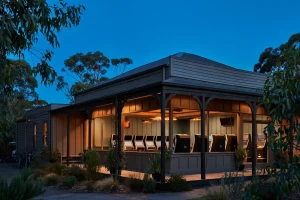
A useful check is to ask what each result actually demonstrates. A name and address may help identify a business. A venue’s own description may clarify whether pokies are part of its facilities. A map position may help estimate distance. Each item answers a limited question; none should be made to carry the weight of the others. A neat pin is not a full verification.
Age is a separate threshold, not a feature of local search. In Australia, gambling, including online pokies, is restricted to people aged 18 or older. A nearby result does not alter that rule or establish that entry or participation is available to someone underage.
From behind a counter, the practical mistake is easy to recognise: treating a search result as if it had already completed the checks that matter. It has not. Proximity can help organise possibilities, but it cannot confirm existence, machine availability or public access. Those details belong to the venue’s own current information. A result is a starting point. Not proof.
Online Pokies and the Australian Legal Divide
Online pokies sit on a different legal footing from machines in a physical venue. The Interactive Gambling Act 2001 prohibits companies from providing real-money online casino games, including pokies, to people in Australia. No Australian licence has been issued for an online casino. That leaves no locally licensed online casino operating as a legal counterpart to a land-based venue.
Legal Risk
No Australian licence has been issued for an online casino; providing real-money online pokies to people in Australia is prohibited under the Interactive Gambling Act 2001.
The distinction matters when a Sydney-themed page or app presents itself as an online extension of a familiar gambling setting. A local name, Australian currency, or wording about cashless play does not create a domestic licence. Nor does a welcome offer change the legal status of the service. The label is not the licence.
I have seen how easily the presentation can blur the underlying arrangement. A site may look familiar and accept Australian customers, while the company providing the gambling service is offshore. Those are separate facts: access from Australia does not make the operator Australian-licensed, and a Sydney reference does not establish a connection to a local venue.
This is why a request for real-money play online cannot be answered as though it were simply a matter of finding the right local machine. The relevant question is not whether an interface loads or whether it uses familiar language. The law addresses the company offering the service to people in Australia. In this market, there is no Australian-licensed online casino.
The practical consequence becomes clearest when a dispute arises. If an offshore casino refuses to pay winnings, an Australian player has no legal recourse in Australia to compel payment. A displayed balance and a successful deposit are not the same as an enforceable local remedy. That is the part a polished screen rarely puts in the foreground.
“Fast withdrawal” is a promotional phrase; it describes an expectation, not a domestic avenue of enforcement. If the operator is outside Australia and a payment dispute occurs, the absence of Australian legal recourse is the central risk. It is not repaired by a local-looking brand, an Australian payment label, or a claim of customer support.

The same divide applies to offers framed around a no-deposit bonus. Such wording is a marketing condition attached to an online gambling service; it does not establish that the service is licensed in Australia or that any winnings can be recovered through Australian courts. An offer can sound cost-free while still being part of a prohibited service. The headline is not the whole contract.
Searches for high-limit or maximum-bet play online also do not change the legal position. They describe the type of gambling being sought, not a different category of authorisation. Real-money online pokies remain within the same legal divide whether the advertised stakes are modest or large, or whether the interface calls itself a casino rather than a games platform.
There is a further point that should not be muddled: the Interactive Gambling Act is directed at operators who provide the prohibited service, rather than imposing a penalty on an individual simply for playing. That does not turn an offshore service into a locally regulated one, and it does not supply a player with domestic protection if the operator withholds winnings. Legal exposure and practical recourse are different questions.
I treat those as separate lines on the ledger. One concerns what a company may offer to Australians; the other concerns what happens when a player and an offshore company disagree. Neither is answered by the city name in a page title. Familiar wording can travel easily. Legal remedies do not.
No Legal Recourse
If an offshore casino refuses to pay winnings, an Australian player has no legal recourse in Australia to compel payment.
So “online pokies in Sydney” can describe what someone hopes to find, but it cannot describe an Australian-licensed online casino: none exists. The real-money online offer remains prohibited for providers serving people in Australia, and an offshore operator’s refusal to pay leaves no Australian legal route to recover the winnings. That is the material distinction. Not the branding.
Opening-Time Searches Need a Venue Check
An early-opening label can look like a practical answer, but it does not establish when a particular Sydney venue starts operating its pokies. A result may repeat wording from a listing, an old page or a third-party directory. None of those, by itself, confirms that the venue is open at the stated time or that its gaming area is operating then.
That distinction matters when the wording suggests a very early start. A page describing pokies as available in the morning may refer to the venue’s general business hours, not the hours for its gaming machines. The two can differ. A hotel, for instance, may have other services or areas operating at times when its pokies are not available. The word “open” does too much work in a short search result.
I have seen how a compact label can flatten several separate conditions into one promise. A venue may have a listed opening time; a gaming area may have its own operating schedule; and the information online may not have been updated. “Early” is a description, not a timetable. The precise start time has to come from information that applies to that venue and its gaming area, rather than from a broad phrase about Sydney pokies.

The same caution applies to claims about a late finish. A result that suggests machines remain available into the night does not prove that a particular venue’s gaming area is operating at that hour. Nor does a general venue listing settle the point. The relevant detail is the actual operating schedule for the machines, not simply the building’s advertised hours.
There is also a separate staffing rule that can be mistaken for an opening-hours rule. A report by regionriverina.com.au says that, from 1 July, venues with more than 20 gaming machines are required to have a dedicated Responsible gambling officer (RGO) on duty whenever those machines are operating. This requirement concerns staffing during machine operation. It does not set a venue’s opening time, extend its hours, or establish that any particular Sydney venue is open at a given hour.
The distinction is straightforward but important: the venue’s schedule answers when its machines operate; the RGO requirement concerns who must be on duty at qualifying venues while they do. One cannot be used to infer the other. A staffing condition is not evidence of a 6 am start, a 7 am start, or any other specific opening time.
In practice, opening-time wording is useful only as a lead to check, not as confirmation. A current venue statement needs to identify the gaming area’s hours, rather than only the venue’s general hours. If the information does not make that distinction, it leaves the central point unresolved. A search result can be concise and still be incomplete.
There is no reliable shortcut in the phrase “pokies open early”. It may reflect a genuine schedule, a broad description or stale information; the wording alone cannot tell which. The operational detail has to be tied to the specific venue and to the machines themselves. Until then, an early-opening claim remains just that: a claim, not a confirmed timetable.
Do
- Check the venue's current statement for gaming area hours
- Verify if the specific machine area is operating
Don't
- Rely on a general "open" label in search results
- Assume general business hours apply to pokies
That is the check that counts.
What a Pokie’s Return Setting Does—and Doesn’t—Show
A return-to-player figure can look like a simple way to compare pokies. It is not a promise about what a machine will return during a visit, or a forecast of the result of the next spin. It describes a setting associated with the game, while each individual spin is determined independently by a Random Number Generator.
That distinction matters when comparing games around Sydney. A figure quoted in an advertisement, review or game information panel may appear to settle which pokie pays better. But the number is useful only if it refers to the precise version and setting in use. A specialist review reports that some providers let casinos select from several return settings for the same game. On that account, the title alone does not establish its return percentage at every venue.
A familiar game can therefore carry different settings in different places. That does not mean a particular setting can be inferred from the game’s name, its appearance, or the fact that it is found in a casino. Nor does a figure attached to one version prove that an identical figure applies to another. The detail has to be tied to the actual configuration; otherwise the comparison is incomplete.
There is another limit. A return setting does not make spins take turns paying out, and it does not create a schedule that can be read from recent results. Each spin is a separate random event. A run of losses does not establish that a win is due, just as a recent win does not show that another is less likely on the next spin.
I have seen the mistake from the operational side: a percentage gets treated as if it were a personal result, then a short session is used to confirm or disprove it. Neither conclusion follows. A setting describes the game configuration, not what one player will receive across a handful of spins. Short outcomes can differ sharply from the figure people have in mind.
This is why “best paying” is a slippery label. Without a confirmed setting for the specific game version, two apparent comparisons may not be comparing like with like. Even where settings are known, that information cannot identify which machine will produce a better result for a particular person or session. The word “best” does more work than the evidence.
The same caution applies when a pokie is described as having a high return. The claim may refer to a configured percentage, but it does not remove randomness from the next spin or guarantee a particular return over a short period. An advertised number is a property of a setting, not a personal payout promise.
So a return figure can help describe one element of a game, provided the setting is clear. It cannot settle the result of a session, make past outcomes predictive, or turn a broad comparison of Sydney pokies into a reliable ranking. The number has a boundary. Randomness remains.
Airport and North Sydney Searches: No Verified Venue Claims
A location phrase can make a result look more definite than it is. “Pokies at Sydney Airport” may appear beside a map pin, a venue category or a short description, but those elements do not, by themselves, establish that a particular place exists there or offers gaming machines. The same applies to results connecting pokies with North Sydney or Sydney city.
I learned to separate the wording of a listing from the thing it is meant to describe. A business name can be stale, a map marker can be misplaced, and a page can repeat information without showing where it came from. Search results are useful for finding leads. They are not a substitute for confirming the venue and its facilities.
That distinction matters especially when a place name covers a broad or complex area. “Airport” might refer to a surrounding district, a transport location or a business using the word in its name. “North Sydney” can also describe a suburb, a wider area or an address used loosely in a listing. A result’s proximity to a label does not establish that the venue is inside the place meant by the search.
I would look for a clear, current statement from the venue itself before treating a listing as factual. The address should match the location being considered, and the venue’s own information should identify gaming machines rather than relying on a general category or a third-party description. If those details do not line up, the listing remains an unconfirmed lead. Not a venue check.
The same discipline applies to searches for pokies in Sydney city. A map result may be nearby without being in the specific district intended, while a page can use “Sydney” broadly for visibility. Those differences may seem small on a screen, but they change what the result actually supports. A location label is not proof of a machine floor.
A maximum-cash-payout search has a separate problem: the phrase alone does not identify a particular game, machine, venue or applicable payout condition. It cannot establish a payout figure. I would not infer one from a general result or carry an amount from one listing over to another setting. Without a clearly identified source and context, the number is not reliable.
In practice, the useful question is not whether a result contains the right place name. It is whether its details refer to the exact venue and the specific facility being described. Names, addresses and machine information need to agree. A polished listing can still be wrong; a map pin can still point to the wrong side of a boundary.
That is the gap between discovery and confirmation. Airport-area, North Sydney and central-city wording can narrow where to investigate, but it cannot settle whether a gaming venue is present at that location. A search phrase is a starting point, not evidence.
Crown Sydney Searches Without Unsupported Claims
A request for pokies at Crown Sydney names a destination and a type of entertainment; it does not, by itself, establish which machines or facilities are available there. Search results can combine venue names, old descriptions, promotional language and pages written for broad audiences. The wording may sound precise while leaving the practical detail unanswered.
I have seen how easily a familiar venue name becomes a shortcut in people’s thinking: once a result pairs the name with “pokies”, the association can feel like confirmation. It is not. A result may repeat an assumption rather than verify what is on the floor. “Best pokies room” is even less exact. It can mean a room someone prefers, a page using a ranking label, or simply a phrase assembled to attract attention. The adjective does no checking.
That distinction matters when the question is specifically about Crown Sydney. Without reliable, current venue information, it would be careless to state that a particular pokie is installed there, that a dedicated room exists, or that a certain machine setting applies. A title, image or description elsewhere cannot establish those details on its own. Nor does a general description of pokies tell anything specific about this venue.

The same caution applies to claims framed as recommendations. “Best” needs a stated basis: best for what, according to whom, and measured how? If the basis is not clear, the label is a judgement dressed as a fact. A polished listing can still omit the very detail that would make it useful, such as whether the claimed facility or machine is actually present. That gap should not be filled with confident wording.
The useful distinction is between a venue association and a verified claim about what is available there. The former is what the name suggests; the latter needs specific, current confirmation. Those are not interchangeable. Search listings and snippets are signposts, not inventory records. They may help identify what someone wants to check, but they cannot settle the question merely by repeating a venue name beside a category.
I would treat statements about a particular Crown Sydney pokie, machine room or setting as unconfirmed unless they can be tied to dependable, current information about the venue. That is not a judgement about the venue. It is a boundary on what the wording can responsibly establish. No invented shortlist. No borrowed certainty.
What Venue-Level Machine Reporting Can Actually Establish
A comparison of Sydney pokies venues needs more than a venue name or a machine count. Operational records can show whether particular safeguards are required and how incidents are documented; they do not, by themselves, show that one venue offers a better experience or is safer than another.
A report published by regionriverina.com.au describes a requirement taking effect from 1 July: when gaming machines are operating, a venue with more than 20 machines must have a dedicated responsible gambling officer (RGO) on duty. The threshold matters. The requirement described in the report applies to venues above it, not automatically to every venue with machines. It also links the officer’s duty to machine operation, rather than simply to the venue being open.
That gives the rule a practical purpose. An RGO is a designated person on duty in connection with responsible gambling while the machines are running. But the existence of the role is not a rating. It does not tell us how a particular officer responds in every situation, whether a patron has experienced harm, or whether one venue’s machines are more favourable. Those are different questions.
Staffing Requirement
From 1 July, venues with more than 20 gaming machines must have a dedicated Responsible Gambling Officer (RGO) on duty whenever those machines are operating.
The same report says venues will have to keep a gambling incident register. It is intended to record details of occurrences, including behaviour indicating that a patron may be at risk of, or affected by, gambling harm. A register makes incidents something the venue is expected to document, rather than leave as an informal recollection. That is a safeguard and an accountability mechanism.
It is not a public scorecard. A record of an incident does not, on its own, establish how it was handled or what followed. Nor does the absence of a disclosed entry prove that no concerning behaviour occurred. Reporting can support oversight, but its value depends on the accuracy of the record and the response to what it captures.
This distinction matters when people try to identify the best pokies venue in Sydney. Venue-level obligations can describe a part of how a business must operate; they cannot substantiate a ranking without comparable evidence about venues and a clear basis for judging them. A machine count, an RGO requirement, or an incident register does not establish game quality, returns, or a superior venue.
From the other side of the counter, compliance paperwork often looks more conclusive than it is. It can show that a process is required, and a register can preserve an account of an occurrence. Neither turns a venue into a recommendation. Safeguards, not medals.
Why “24-Hour Pokies” Requires More Than a Search Snippet
A “24-hour” label can describe what a page claims, not what a venue is doing now. Search results may repeat an old listing, compress details from a third-party directory or show a venue category without confirming machine access at every hour. The wording is not an operating schedule.
That distinction matters when someone is checking whether pokies are available late at night or early in the morning. A venue may have separate public opening hours and machine-area conditions; a broad label does not explain either. Nor does it establish that the venue is currently open, that its machines are operating, or that a listing has been updated. Search snippets are signposts, not evidence.
I have seen how a short label can outlive the information it was meant to summarise. Once repeated across listings, “open all day” starts to look settled, even when the underlying record may be stale or incomplete. The more precise check is the venue’s own current information, with a direct confirmation when the timing matters. A result that says “open now” is still only as reliable as the details behind it.
There is also a separate staffing rule, which should not be confused with a promise about hours. A report by regionriverina.com.au says that, from 1 July, a venue operating more than 20 gaming machines must have a dedicated responsible gambling officer (RGO) on duty for the period those machines are running. That requirement links the officer’s presence to machine operation; it does not say that a venue must operate machines around the clock, or that any particular Sydney venue does so.
The distinction is operational, not semantic. A staffing condition may apply during a venue’s chosen machine hours, but it cannot verify those hours for a specific place. A search result cannot bridge that gap by adding “24-hour” to a name.
For late-night plans, the useful question is not whether the phrase appears on a results page, but whether a current venue statement confirms the relevant hours and machine availability. Without that confirmation, “24-hour pokies” remains a label, not a dependable timetable.

CBD Clubs and the Limits of Venue Signage
A club sign can identify a venue or point towards facilities, but it is not a reliable guide to what machines are available inside, how they operate or what support is provided. I learned to separate the message on the wall from the venue’s responsibilities. “Helpful directions” can still cross a line when their placement encourages gambling or sends patrons towards cash.
In NSW, signage directing patrons to gaming lounges must be removed if it is within eyeshot of an ATM or EFTPOS terminal. Signs directing patrons to ATMs must also be removed if they are within eyesight of gaming machines. The placement matters: a sign that seems routine in a corridor can become an inducement when it connects machines with ready access to money. A search for clubs with pokies in the CBD cannot show whether a particular sign meets those rules.
Venue responsibility also includes recording relevant gambling incidents. A report by regionriverina.com.au describes a requirement for venues to keep a gambling incident register, including details of occasions when a patron’s behaviour indicates they may be at risk of, or affected by, gambling harm. That record is a safeguard and an accountability measure. It is not a public rating, proof that a venue has no harm-related incidents, or evidence that one club is better than another.
Self-exclusion is a separate issue from signage. BetStop applies to Australian-licensed operators; it does not bind offshore sites. A sign in a club cannot establish the scope of an exclusion or substitute for checking the terms of the relevant scheme. The distinction is practical: signage governs what a venue may direct patrons towards, while exclusion concerns whether access to gambling is restricted under the applicable arrangement.
I would not infer machine availability, support quality or suitability from a club’s location or promotional wording. The useful evidence is the venue’s actual practice and whether its signage and incident handling meet the relevant obligations. A polished sign proves very little.

Parkes Searches Do Not Confirm a Sydney Venue
A request for pokies in Parkes alongside Sydney can leave the intended location unclear. The two place names appearing together do not establish that a venue is in Sydney, that Parkes is being used as a Sydney suburb, or that any particular venue has gaming machines. Wording is not proof of a location.
The same caution applies to broad requests for the best pokies in Sydney. “Best” can describe what someone hopes to find, but it does not identify a venue or substantiate a claim about its machines. A result that combines Parkes and Sydney may reflect the way a listing or page has been labelled; that label alone does not confirm the relationship between the places.
I have seen location words do a lot of quiet work in venue descriptions. They can make a result feel local before the actual address has been checked. That impression is not evidence. A name, heading or map label can point towards a place, but none should be treated as confirmation that a specific venue is physically where the wording suggests.
For someone deciding whether a venue is relevant, the useful distinction is between a place name and a verified address. If the address does not clearly identify the intended area, the Parkes reference cannot fill that gap. Nor does the phrase establish that the venue offers pokies. Those are separate claims, and each needs support of its own.
This is a narrow point, but an important one: combining “Parkes” with “Sydney” does not make a venue a Sydney venue. Broad location wording may describe the topic someone is seeking; it does not settle where a business is, or what it provides.
Labels can suggest. They cannot verify.
Are online pokies legal for Australian players?
Yes, Australians can play on offshore sites that accept them, but companies cannot legally offer real-money online pokies to Australian residents without a domestic licence, and no Australian-licensed online casino exists. If an offshore casino refuses to pay, players have no legal recourse in Australia.
What’s the best strategy for playing pokies?
No strategy can predict or control a spin: each one is an independent random event determined by a Random Number Generator. Deposit, loss and session-time limits can help you manage your gambling.
What is the cost-benefit calculation of casino promotions?
Calculate the required turnover before you can withdraw and check for cash-out caps. For example, a $500 bonus with a 40x wagering requirement means $20,000 in bets; if the requirement applies to a $500 deposit plus a $500 bonus at 35x, it means $35,000 in bets.