A practical look at accommodation choices, gaming requirements, dining searches and venue information relevant to a Sydney casino visit.
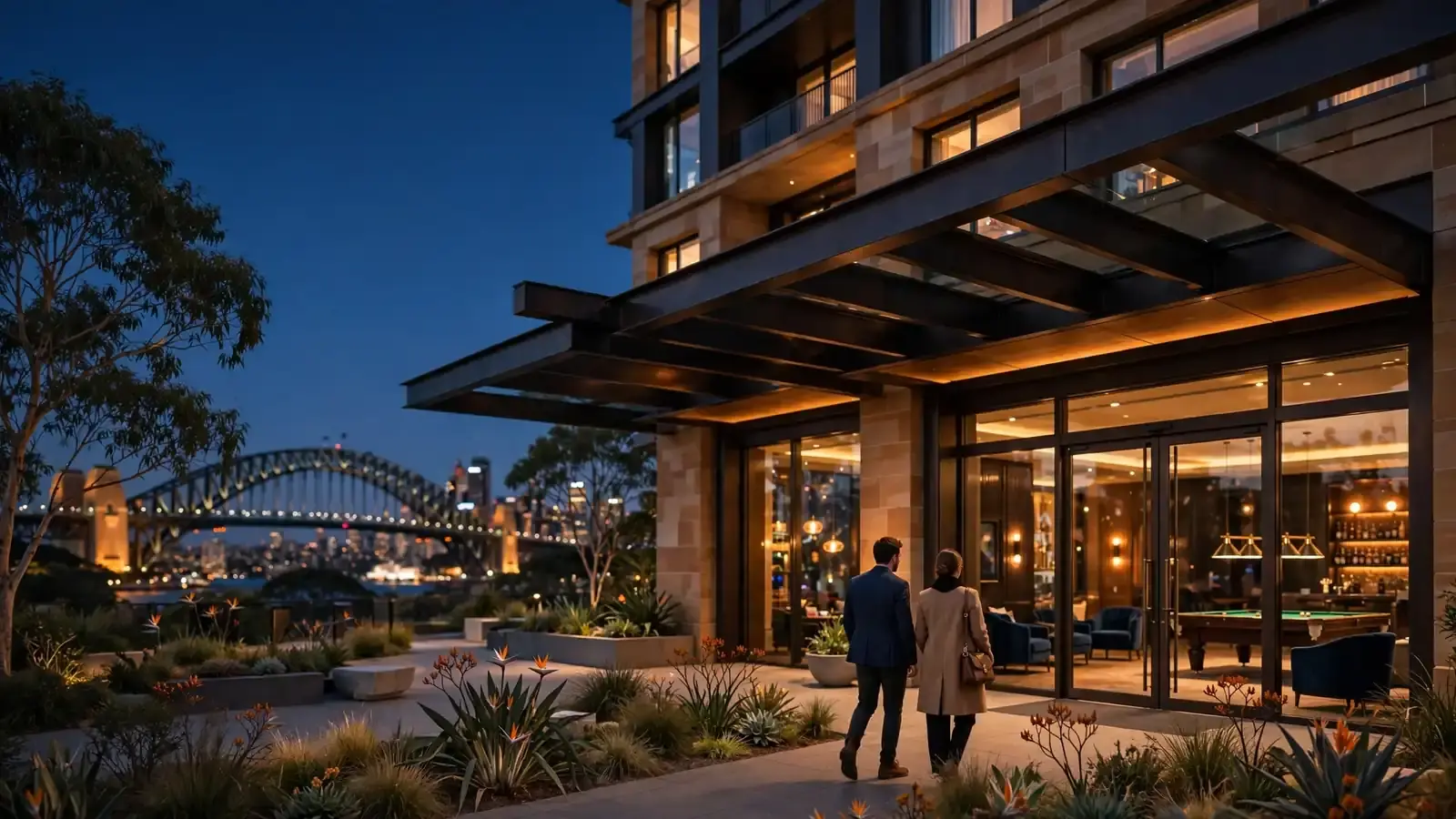
Hotel Stays and Accommodation Around Sydney’s Casino
A stay associated with a casino can mean two quite different things: a room in a hotel connected with the venue, or accommodation elsewhere that makes a casino visit one part of a Sydney trip. The distinction matters more than the label. A property described as a “casino hotel” may appeal because it combines lodging and entertainment in one place; a hotel nearby may suit someone who wants to choose accommodation independently and travel to the venue as needed. Neither description, by itself, establishes what a room costs, what facilities are included or how close the property is.
I have seen accommodation decisions become harder when a broad label is treated as a promise. “Central,” “nearby” and “casino hotel” can all sound precise while leaving practical questions unanswered. The useful comparison is between the actual room offer, its conditions and the travel arrangements it implies. Marketing language is the wrapper. The booking terms do the work.
Casino-hotel rooms: what the label does and does not tell you
For a casino-hotel room, the first question is whether the room is sold as part of a hotel stay or bundled with something else. A listing may highlight a room while placing important details elsewhere: eligible dates, cancellation conditions, inclusions, or restrictions on who can book. Those terms determine whether the offer fits a particular trip. A room headline alone does not.
Choosing a casino for a Sydney-focused shortlist means checking the information available on licensing, deposits and payouts before deciding where to play. These brief verdicts highlight the stated details for each operator without assuming anything beyond them.
-
WinSpirit Casino
- License
- Curacao eGaming OGL/2024/923/0383 (Antillephone N.V.)
- Min. deposit
- A$30
WinSpirit Casino lists a Curaçao eGaming OGL licence, number OGL/2024/923/0383, issued by Antillephone N.V. Its minimum deposit is A$30.
-
Golden Pokies
- License
- Curacao
Golden Pokies lists a Curaçao licence. No deposit or payout details are provided here.
-
Wild Tokyo
- License
- Curacao
- Payout speed
- crypto 30-60 minutes, fiat 1-5 days
- Min. deposit
- A$10
Wild Tokyo lists a Curaçao licence and a minimum deposit of A$10. Its stated payout times are 30–60 minutes for crypto and 1–5 days for fiat.
-
MrPacho
- Payout speed
- crypto 30-120 minutes, fiat 24-72 hours
- Min. deposit
- A$30
MrPacho has a stated minimum deposit of A$30. Payouts are listed as taking 30–120 minutes for crypto and 24–72 hours for fiat.
-
Bizzo Casino
- License
- Curacao Gaming Control Board (TechSolutions Group N.V.)
Bizzo Casino lists a licence from the Curaçao Gaming Control Board, with TechSolutions Group N.V. named in the licence details.
-
GoldenCrown
- License
- Curacao Gaming Control Board OGL/2023/176/0095 (Hollycorn N.V.)
GoldenCrown lists a Curaçao Gaming Control Board OGL licence, number OGL/2023/176/0095, associated with Hollycorn N.V.
-
Vegaz Casino
- License
- Curacao OGL/2024/1335/0780
- Min. deposit
- EUR 20
Vegaz Casino lists a Curaçao licence, number OGL/2024/1335/0780. Its minimum deposit is EUR 20.
-
Thor Casino
- License
- Curacao – Antillephone N.V. (Versus Odds B.V.)
- Min. deposit
- EUR 20
Thor Casino lists a Curaçao licence through Antillephone N.V., with Versus Odds B.V. named in the details. Its minimum deposit is EUR 20.
-
Neospin
- License
- Curacao Gaming Control Board OGL/2023/176/0095 (Hollycorn N.V.)
Neospin lists a Curaçao Gaming Control Board OGL licence, number OGL/2023/176/0095, associated with Hollycorn N.V.
-
SkyCrown
- License
- Tobique Gaming Commission
- Payout speed
- crypto ~10-15 minutes, fiat 1-5 days
- Min. deposit
- A$30
SkyCrown lists a Tobique Gaming Commission licence and a minimum deposit of A$30. Its stated payout times are around 10–15 minutes for crypto and 1–5 days for fiat.
Room categories also need to be compared on their stated attributes, not just their names. A higher-sounding category is not automatically the better choice. The useful details are the ones that affect the stay: occupancy, bed configuration, view or layout where specified, and any stated difference in included services. If a listing does not explain a feature, it should not be assumed from a photograph or an appealing category name.
The same discipline applies to “exclusive” or “premium” language. “Exclusive” may describe a booking channel or a condition, not a guaranteed upgrade. “Premium” is a sales label unless the room description identifies what changes. I would read the room details before comparing the headline price. Otherwise, two offers that appear similar may not cover the same thing.
A casino-linked hotel can be a convenient fit for a trip built around the venue, but convenience is personal and conditional. Some visitors may value having accommodation and the main activity in one setting. Others may prefer a quieter or more independent stay, or may be travelling for reasons unrelated to the casino. A hotel’s association with a venue does not settle those preferences. It only narrows the first part of the decision.

Comparing accommodation offers
A search for Sydney casino hotel deals can return offers that are not directly comparable. One rate may have different cancellation terms from another; a package may include an extra that has little value to a particular guest; a reduced headline price may apply only under conditions that do not suit the dates. The sensible comparison is the total set of terms, rather than the largest discount language on the page.
I look for a clear account of what the rate includes and what happens if plans change. The booking page should state the room category, applicable dates, payment and cancellation conditions, and any package inclusions. If a condition is difficult to locate, that is a reason to pause rather than fill in the gap with an assumption. A discount is not a saving if the attached conditions make the booking unsuitable.
It is also worth separating a hotel’s own offer from a third-party listing. The latter may present the same stay through a different booking process, with its own rules for amendments and support. The property name can be identical while the terms are not. I would check who is taking the booking and which party handles changes before treating two displayed prices as equivalent.
A deal should be judged against the actual trip, not against an abstract “best” rate. An offer with a restrictive condition may be poor value for someone whose plans are uncertain, even if its displayed price looks attractive. A flexible rate can be more useful when the itinerary is unsettled. The right comparison is not simply cheap versus expensive; it is fit versus mismatch.
Do
- Compare room categories based on stated attributes
- Read full booking terms and cancellation conditions
- Verify the identity of the booking party
- Match the offer against your specific trip needs
Don't
- Rely on broad labels like "central" or "premium"
- Assume features from photographs or category names
- Treat a reduced headline price as a guaranteed saving
- Assume a "best" rate is a fit for every itinerary
No fixed price can be responsibly attached to a Sydney casino stay without a live offer and its conditions. Rates change, and the same room can be presented differently depending on dates and availability. I would treat any general figure detached from a current booking page as a weak basis for planning. Check the exact dates and terms.
Nearby hotels as a separate choice
Hotels near a Sydney casino are not automatically part of the casino’s hotel operation. A nearby stay may be independently managed, with its own booking policies, facilities and service arrangements. That independence can be an advantage: it allows accommodation to be selected for the wider trip rather than for a single venue. But “near” is not a measurement. The exact address and route matter.
For that reason, I would compare the property’s map location with the route that will actually be used, rather than relying on a short promotional description. Walking distance, transport connections, luggage and late-night travel can change how convenient a location feels. A map can help establish the geography, but it does not guarantee a particular journey time or ease of access. Those depend on the route and circumstances.
A nearby hotel may also suit a mixed itinerary better: the casino is one stop rather than the centre of the stay. That can make it easier to weigh other priorities, such as the location of meetings, sightseeing or visits with family. The useful accommodation choice is the one that supports the whole itinerary, not necessarily the one with the strongest casino association.
When comparing nearby options, I would use the same checks as for a casino-linked room: room description, booking conditions, cancellation rules and the party responsible for the reservation. Then I would add location as a separate comparison, verified against the actual address. A property can be close enough for one plan and inconvenient for another. There is no universal definition of “near.”

Making the decision
The practical choice is between integration and independence. A casino-hotel room may reduce the need to coordinate separate bookings if the stay is organised around that venue. A nearby hotel may offer a better fit when the trip has several destinations or when accommodation preferences take priority over proximity. These are planning distinctions, not claims that one category is inherently better.
Before booking, the essential check is whether the room and rate are described clearly enough to compare. Confirm the dates, room type, occupancy, inclusions and cancellation conditions on the booking page. For a separate hotel, verify the address and route rather than relying on a broad proximity label. For a package, identify exactly what is included and which conditions apply.
I would not let a “deal” label make the decision. It is the booking terms, location and room details that establish the value. Terms first. Then the room.
Poker Machines, Age Checks and NSW Pre-Commitment
Poker machines are a distinct part of a casino visit, and the rules around them matter whether the search is for poker at a Sydney casino or for a room to play in. The wording can blur different activities: poker tables and poker-machine gambling are not the same thing. This section concerns Electronic Gaming Machines (EGMs), commonly called pokies in Australia, and the safeguards attached to their use in NSW.
A person must be at least 18 to gamble on poker machines in NSW. Venues are required to check identification for machine gambling, so age verification is part of access rather than a courtesy. Using false information or trying to get around an age check can have legal consequences; the practical point is that entry to a gaming area does not itself establish eligibility to play. I have seen this distinction matter at the counter: staff need to apply the rule, not infer age from appearance or a booking.

Pre-commitment comes before play
NSW requires a pre-commitment step for poker-machine play. Players set a loss limit before they begin, making the decision in advance rather than after a session has started. It is a safeguard, not a forecast of how a session will go and not a promise that losses will stop at a particular moment in every circumstance. The limit is intended to put a boundary around planned losses.
That timing is important. A limit chosen before play is less exposed to the pressure of trying to recover money already lost. Raising stakes to win losses back can deepen them; a pre-set boundary only helps if it is treated as a boundary. I would not describe the system as a strategy for winning. It is a control on exposure.
The requirement also changes how a machine session begins. The player needs to make a decision about acceptable loss before play, rather than treating the machine as an open-ended activity. The precise steps for setting a limit are a venue-process question, so they should be confirmed with staff at the time. The rule itself is statewide.

Poker rooms, tournaments and machine rules
Searches for a Sydney casino poker room or tournament may refer to organised card play, while a request for poker machines means EGMs. Those are different formats, and the age and pre-commitment points here specifically concern machine gambling. A poker tournament listing, sports bar or room description does not explain the rules for using pokies. Nor does a venue’s general activity establish that every gaming option is available at every time.
The same distinction helps when a search combines casino rooms with poker or machine play. Accommodation and gaming access are separate questions; a room booking is not permission to gamble, and it does not replace age checks or pre-commitment. For the safeguards, the relevant setting is the machine area and the NSW requirements that apply there.
Club Liverpool is notable in the NSW club sector for having the largest number of operational poker machines among clubs in the state. That fact describes the scale of its machine operation, not the odds of a particular machine or a reason to play there. More machines do not improve an individual outcome.
Age and Pre-commitment
Gambling on poker machines in NSW requires a person to be at least 18 years old and mandates a pre-commitment loss limit be set before play begins.
A sports bar or a venue’s opening status also does not alter these rules. Whether a venue is open on a given day is a separate operational detail; the legal age and pre-commitment requirements remain the same wherever NSW poker-machine gambling is offered. The control starts before play.
Buffet, Restaurants and Food: What the Search Terms Mean
A request for breakfast at a Sydney casino can mean several different things: a meal at a restaurant, a buffet, food included with a stay, or simply somewhere to eat before a visit. Those are separate arrangements, not interchangeable labels. I have seen how a broad phrase such as “resort” can make a search result sound more comprehensive than the information behind it. The useful distinction is between what a venue actually lists for dining and what a visitor infers from the name.
“Buffet breakfast” describes a style of service, not proof that a buffet is available at a particular venue. Likewise, a buffet listing does not establish that breakfast is included with a room, that it is served every day, or that it suits every dietary need. Those details depend on the specific offer and its conditions. A dining page or booking description should state what is included; if the wording is unclear, the meal should be treated as a separate choice rather than assumed to come with a stay.

The same care applies to the word “breakfast” on its own. It may refer to a restaurant’s morning menu, a package attached to accommodation, or a general expectation that food will be available early in the day. Those possibilities matter because each has different practical implications. A package can have conditions that do not apply to a walk-in meal, while a restaurant menu does not necessarily say anything about room inclusions. The label alone cannot settle the distinction.
Buffet, restaurant or food court?
A buffet, a restaurant and a food court answer different needs. A buffet suggests a format in which diners choose from food presented for self-service; a restaurant generally signals a more defined dining service; and a food court suggests multiple food options in a shared area. These descriptions help sort the kind of meal being sought, but they do not confirm that any of those formats exists at a particular Sydney casino or resort.

That distinction is worth keeping when comparing listings. “Dining” is a broad heading. It can cover different styles, settings and service arrangements, and it may not identify whether a meal is casual, table-served or self-service. A specific venue page, current menu or booking condition carries more weight than a broad promotional label. If the format is not stated, it is better not to infer it from photographs or from the word “casino.”
The same rule applies to claims about variety. A buffet label does not tell us what dishes are served, whether the selection changes, or whether a particular requirement can be accommodated. A restaurant label does not confirm a menu, and “food court” does not guarantee a particular cuisine or range of outlets. Those are details to establish from information published by the venue, not from the category name.
“Casino resort” can also blur the lines. Resort language describes an overall positioning; it does not by itself verify that dining is included, that food is served near a pool, or that every advertised amenity is available to every visitor. I treat the dining decision as its own check: identify the actual food service, then confirm the terms relevant to that meal. A broad resort description is not a menu. It is not a meal plan either.
Poolside food and other resort expectations
Pool-related food searches often combine two questions: whether a venue has a pool, and whether food is available there. Neither answer follows from the word “resort.” A reference to poolside dining would need to be supported by a current venue listing that describes that service. Without that, it would be misleading to imply that visitors can order food by a pool, that a pool is open to them, or that dining and pool access are bundled.
This is where promotional language can do quiet work. “Resort” sounds like a complete leisure package, but it may not explain which facilities are available, who can use them, or whether access is subject to separate terms. Food is only one part of that picture. The practical question is not whether a venue sounds like a resort; it is whether the particular dining service and facility are described clearly enough to plan around.

For a meal tied to a facility, the terms should make the connection explicit. A pool listing and a restaurant listing are not evidence of a combined pool-and-food service. Nor does a photograph establish availability. Those are separate claims, and each needs its own confirmation. No assumption should be made about pool facilities or food options from the general character of a venue.
Rewards, packages and employment searches
Casino rewards information is another category that can be mistaken for a dining offer. A rewards programme may describe membership or benefits, but its name alone does not establish that meals are included or discounted. Any food-related benefit would need to be set out in the programme’s current terms, including who can use it and any conditions attached. Membership language is not a promise of a meal.
The same separation matters for packages. An offer that mentions accommodation or a resort stay may or may not include breakfast. The decisive wording is the package description: whether it names a meal, how that meal is provided, and what restrictions apply. A room booking and a restaurant booking are not automatically one transaction. If the offer does not expressly state that breakfast is included, it should not be treated as included.
Employment searches are different again. Someone looking for casino jobs in Sydney is looking for work, not food or a place to eat. A jobs page may explain roles and application procedures, but it does not verify dining information. Keeping these subjects apart makes the result more useful: employment information belongs with recruitment, rewards terms with membership, and menus or meal packages with dining.
A practical way to assess food information
I use a simple order of checks. First, identify the actual service: buffet, restaurant, food court, breakfast package or another stated format. Next, look for the venue’s own current description rather than relying on a broad directory label. Then read the conditions attached to the meal, especially where it is presented as part of a room or rewards offer. If the description does not specify the detail being relied on, that detail remains unconfirmed.
This approach avoids a common mix-up between what a visitor hopes to find and what a listing actually says. A search for breakfast near a casino may return accommodation pages, restaurants, promotional packages and general resort material together. Their proximity in a results page does not make the services equivalent. A hotel breakfast is not necessarily a public restaurant booking; a restaurant menu is not necessarily included in a stay; and a buffet term does not establish a particular meal format unless the listing says so.
The same discipline applies to dietary needs and group plans. No general dining label confirms ingredients, allergen handling, seating arrangements or suitability for a particular group. Those points require specific, current information from the provider. A polished photograph or a broad description such as “dining” cannot answer them. For decisions that depend on those details, written information is more useful than inference.
The central point is modest but important: food terms describe different expectations, and a casino or resort label does not settle which one applies. Breakfast, buffet dining, restaurants, food courts, rewards and poolside service each need to be understood on their own terms. Clear wording matters. The label is not the offer.
Parking, Online Casino Searches and the Australian Legal Distinction
Parking is a practical part of planning a visit to a Sydney casino venue, but availability, fees, entry arrangements and valet services are venue-specific details. I would not treat a result mentioning “free parking” or valet as confirmation that either is available on the day. Parking terms can change, and a listing may refer to a different property or an earlier arrangement. The reliable check is the venue’s own current information before setting out. No assumption should be made about free spaces or valet service.
That distinction matters because searches combining Sydney, casino and online can lead to two different kinds of result: a physical venue, or a website offering casino-style games. The first is a place to visit. The second is not an online version of the Sydney venue, and local dining, bingo or parking information does not establish that online gambling services are lawful.
Legal Restriction
Under the Interactive Gambling Act 2001, operators based in Australia cannot lawfully offer real-money online casino games to people in Australia.
Under the Interactive Gambling Act 2001, operators based in Australia cannot offer real-money online casino games to people in Australia. That restriction covers games such as pokies, blackjack and roulette. A site’s use of an Australian city name, or its appearance in a local search, does not change the legal position. Any gambling site claiming to lawfully provide gambling services in NSW must hold an ILGA licence; that does not make prohibited online casino games lawful.
Offshore sites sit in a different and less protective position. Australian players are not criminally liable simply for using an offshore platform, but those services are not regulated under Australian law. That can leave limited options if a dispute arises, and winnings may not be protected if an operator becomes insolvent. I have seen the distinction between “accessible” and “protected” blurred in promotional language. They are not the same thing.
Some offshore operators may also impose withdrawal caps, including weekly caps of AU$4,000, which could affect a jackpot winner. Bonus terms can carry wagering requirements, cashout limits or conditions under which winnings may be voided. Those terms are not a substitute for Australian consumer protections. A site presenting itself as a convenient alternative to a local venue should be read with particular care.

For a physical visit, parking should be checked as a separate logistical detail, rather than inferred from restaurant, bingo or general venue listings. For online casino offers, the key distinction is legal, not geographic: a website referring to Sydney is still an offshore service if it is operated outside Australia. Sports betting is treated differently under Australian law, but that does not make casino-style games lawful when supplied online.
I keep these two decisions separate. A venue visit involves travel arrangements; an online casino offer involves a prohibited service for operators targeting people in Australia and potential risks beyond the game itself. No shortcut.
Contact, Opening Times, Events and Other Venue Details
A casino visit is often planned around details that look simple on a listing: an address, a phone number, a closing time, a concert date or a dress code. In practice, each answers a different question. An address identifies a destination, but not the best entrance for a particular booking. A posted opening time does not necessarily describe every service inside the venue. An event listing may cover the performance while leaving entry arrangements to a separate booking notice.
I separate those details before making plans. The venue’s own current information is the sensible place to confirm a contact route, address and operating hours; event organisers and ticketing information may carry additional instructions for a particular performance. Third-party listings can help identify what to check, but an old number or copied schedule is not a reliable basis for a timed visit. Small differences matter. A call made to a general switchboard may not reach the team responsible for a booking or event.
Contact details and opening times
A search for a Sydney casino contact number can lead to several kinds of result: a general venue line, a hotel or booking contact, an event enquiry channel, or a directory entry that has been copied from elsewhere. These are not interchangeable. The right contact route depends on the issue. A question about a ticketed performance belongs with the event information; a question about access or a booking may require a venue contact. If the first result does not make clear which team it reaches, the number alone is not enough.

I treat a contact page as useful when it identifies the purpose of each channel and gives a clear way to follow up. Before relying on a number, it is worth checking that it appears on the relevant venue’s own current page and that the page concerns the intended location. If a call is important to a reservation or event, keeping the confirmation or written reply avoids having to reconstruct the details later. Routine. But important.
Opening times need the same care. A venue may have broad operating hours while a particular area, service or event follows a different schedule. A general “open” status therefore does not establish that every part of the complex is available at that time. Nor does an event’s published start time, by itself, explain when doors open or when entry ends. Those details should be read from the information attached to the specific activity.
For a late arrival, a tight transfer or a visit planned around a show, checking the relevant schedule close to the date is more useful than relying on an old result saved earlier. Where opening information is not specific about the area or activity, a direct enquiry can resolve the distinction. It is better to confirm the point than to infer it from a headline time.
Address and map planning
A Sydney casino map can serve several purposes: locating the venue in the city, understanding the approaches to the building, or finding a particular entrance once on site. Those are different tasks. A map pin may take a visitor to the general property, but it does not necessarily show the entrance that applies to an event, a booking or a particular mode of arrival. The address is a starting point, not a complete arrival plan.

I check that the map pin and the address belong to the same venue and use the route information relevant to the visit. A venue’s own map, where available, can explain internal layout or entrance names; an ordinary street map is better for the surrounding area. Neither should be treated as a substitute for event instructions. If a ticket or confirmation names a specific entrance or meeting point, that wording takes priority over a generic pin.
It also helps to keep the distinction between destination and access clear. A map can show where a building sits without confirming current access arrangements, traffic conditions or temporary changes. Those are time-sensitive details. For an event, the organiser’s latest arrival instructions are more useful than assumptions based on a previous visit.
Events and concerts
Concert information can change in ways that affect the practical shape of a visit: the listed start, entry arrangements and any event-specific conditions may be published separately or updated after an initial announcement. A venue calendar can identify an event, but the event’s own ticket or notice is the more appropriate place to confirm the terms attached to that performance. I would not read a general venue schedule as a promise that a particular show is proceeding unchanged.
Before travelling, the useful checks are straightforward: confirm the event date and venue, read the ticket instructions, and look for notices that affect entry or timing. Where a booking is tied to a named performance, the ticket details matter more than a broad “events” page. If an event is cancelled, rescheduled or moved, the organiser’s notice and ticketing channel are the relevant references for what happens next.

The same approach applies to non-concert events. A listing may announce an occasion without describing every operational detail. The format, access conditions and schedule should be taken from the event-specific information rather than inferred from the casino’s general facilities. “On at the casino” is a location description, not a full itinerary.
Bars, table games and dress expectations
A search for a casino bar in Sydney can mean a place to meet before an event, a bar within a larger complex, or simply an amenity someone expects to find near gaming areas. The label alone does not establish a particular bar’s location, service hours or entry conditions. Those details belong to the venue’s current directory or the relevant bar’s own listing. A bar’s presence should not be inferred from a general description of a casino, and its availability at a particular time should not be assumed from the venue’s overall hours.
The same distinction applies to table games. Baccarat and craps are recognisable casino games, but a search for either does not establish that a particular Sydney venue offers it, that a table is operating at the time of a visit, or that access is available under every circumstance. Game availability and operating arrangements are venue-specific. Current information from the operator is the appropriate basis for deciding whether a particular game is part of the intended visit. A broad page about casino gaming is not a live table schedule.
Dress-code questions are often answered with a general description that sounds definitive but may not cover every area or event. A performance, private function or designated space can have its own conditions. Where an operator publishes entry standards, those are the terms to check; an assumption based on photographs, an old visit or informal advice can easily be wrong. If the purpose of the visit is a particular event, its instructions should be read alongside the venue’s general guidance.
This is where the word “luxury” can obscure the practical issue. It says little about whether a specific entrance, event or area has a stated dress requirement. The useful information is the actual condition and where it applies, not the atmosphere implied by promotional language.
A practical check before setting out
I keep the final check narrow and specific. Confirm the venue and address; verify the relevant contact channel; distinguish general opening hours from the schedule for the intended activity; and read the latest event or booking instructions. For a bar or table game, check the current venue information rather than treating a search result as confirmation. For a map, match the entrance details to the booking or event.
This approach avoids two common planning errors: assuming that one schedule covers every facility, and treating a general map marker as precise arrival guidance. It also makes a phone call more useful. A clear question about a named event, entrance, bar or game is easier to resolve than a broad request for “casino information.”
The practical details are not glamorous, but they determine whether a visit runs smoothly. A current address, a relevant contact route and event-specific instructions do more work than a confident-sounding directory snippet. Confirm the detail that governs the visit. Then plan around that.
What does the legal status of offshore online casinos and NSW gambling law say?
Under the Interactive Gambling Act, Australian-based operators cannot offer online casino games such as pokies, blackjack or roulette to people in Australia. Offshore casinos are not regulated under Australian law, although it is technically not illegal for Australian players to use them; a reputable offshore licence may permit real-money online play.
What is the legal age to play pokies in NSW?
You must be at least 18 to play poker machines in NSW.
Are online casino-style games restricted in Australia?
Yes. The Interactive Gambling Act restricts Australian-based operators from offering online pokies, blackjack and roulette. Offshore sites may also block Australian players or games, including through IP-based location checks.
How do NSW pokies regulators monitor player protection?
NSW has mandatory pre-commitment systems that require players to set a loss limit before playing poker machines.
What are the bonuses and wagering requirements?
Free-spin winnings commonly carry wagering requirements of 20 to 50 times, and pokies typically count fully toward those requirements. Free-spin winnings must be wagered 30 times before withdrawal.