Lightning Link is a venue-based game in Australia; free-play credits, game variants and jackpot features do not make it a local online casino offer.
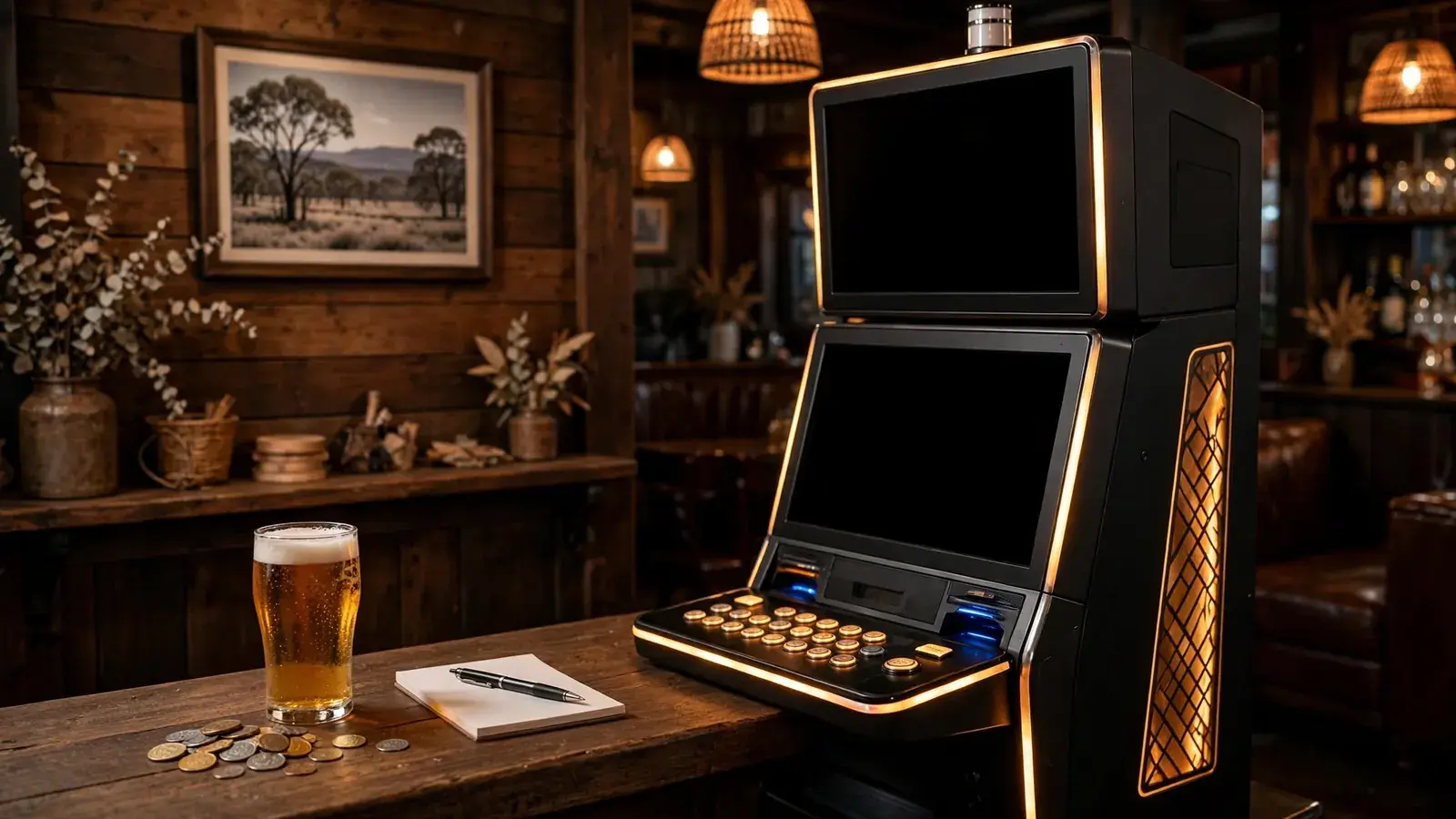
Lightning Link in Australia: Venue Game, Not an Online Casino Offer
Lightning Link is a game series developed by Australian company Aristocrat. In Australia, it is encountered on machines in land-based venues, not as a real-money online casino game for local players. That distinction matters: a website using the game’s name or presenting a similar-looking product does not make it an authorised online version of Lightning Link.
I have learned to separate a game’s familiar branding from the way it is actually made available. In this case, the name can appear in searches for online casino games and pokies, but the Australian setting is different from the impression those searches might create. Lightning Link is a venue game here. It is not an online casino offer for real-money play.
What Australian law covers
The Interactive Gambling Act 2001 restricts operators from providing certain online gambling services to people in Australia. The prohibited services include online poker and casino-style games, a category that covers online pokies. The law is directed at the supply of those services to people in the country; it is not a general statement that every form of gambling is treated alike.
If you’re looking for Lightning Link online pokies in Australia in 2026, this shortlist offers a starting point for checking operators and the details available about them. Review each casino’s terms and suitability before playing.
-
WinSpirit Casino
- License
- Curacao eGaming OGL/2024/923/0383 (Antillephone N.V.)
- Min. deposit
- A$30
WinSpirit Casino lists a Curacao eGaming licence, OGL/2024/923/0383, held by Antillephone N.V. Its minimum deposit is A$30.
-
Golden Pokies
- License
- Curacao
Golden Pokies lists a Curacao licence. That is the licensing detail available for this operator.
-
Wild Tokyo
- License
- Curacao
- Payout speed
- crypto 30-60 minutes, fiat 1-5 days
- Min. deposit
- A$10
Wild Tokyo lists a Curacao licence and a minimum deposit of A$10. Its stated payout times are 30–60 minutes for crypto and 1–5 days for fiat.
-
MrPacho
- Payout speed
- crypto 30-120 minutes, fiat 24-72 hours
- Min. deposit
- A$30
MrPacho has a minimum deposit of A$30. Its stated payout times are 30–120 minutes for crypto and 24–72 hours for fiat.
-
Bizzo Casino
- License
- Curacao Gaming Control Board (TechSolutions Group N.V.)
Bizzo Casino lists the Curacao Gaming Control Board, with TechSolutions Group N.V. identified. This licensing information is its notable detail here.
-
GoldenCrown
- License
- Curacao Gaming Control Board OGL/2023/176/0095 (Hollycorn N.V.)
GoldenCrown lists a Curacao Gaming Control Board licence, OGL/2023/176/0095, held by Hollycorn N.V.
-
Vegaz Casino
- License
- Curacao OGL/2024/1335/0780
- Min. deposit
- EUR 20
Vegaz Casino lists a Curacao licence, OGL/2024/1335/0780. Its minimum deposit is EUR 20.
-
Thor Casino
- License
- Curacao – Antillephone N.V. (Versus Odds B.V.)
- Min. deposit
- EUR 20
Thor Casino lists a Curacao licence associated with Antillephone N.V. (Versus Odds B.V.). Its minimum deposit is EUR 20.
-
Neospin
- License
- Curacao Gaming Control Board OGL/2023/176/0095 (Hollycorn N.V.)
Neospin lists a Curacao Gaming Control Board licence, OGL/2023/176/0095, held by Hollycorn N.V.
-
SkyCrown
- License
- Tobique Gaming Commission
- Payout speed
- crypto ~10-15 minutes, fiat 1-5 days
- Min. deposit
- A$30
SkyCrown lists a Tobique Gaming Commission licence and a minimum deposit of A$30. Its stated payout times are around 10–15 minutes for crypto and 1–5 days for fiat.
The distinction between the operator and the player is important. The Act targets the provision of prohibited services. Australian players are not known to have been prosecuted for gambling on offshore sites, but that does not make an offshore casino lawful to provide its service in Australia, nor does it mean the service is approved or protected locally. The commercial side of the arrangement carries the legal risk.
That is the part promotional copy tends to blur. A foreign licence, a familiar payment method or a page that loads successfully does not change the Australian rule on supplying online casino-style games. Access can also change as enforcement action is taken. A website’s presence at one point is not proof that it can continue operating here.
ACMA’s enforcement role
The Australian Communications and Media Authority, or ACMA, is the federal regulator responsible for enforcing the Interactive Gambling Act and monitoring compliance with national interactive-gambling laws. Where a site provides a prohibited service or advertises one in Australia, ACMA can ask internet service providers to block access to it.
The scale of that work is visible in the regulator’s published enforcement figures. Since November 2019, ACMA has blocked more than 1,455 illegal gambling and affiliate websites after enforcement action. For services leaving the market since enforcement began in 2017, published counts differ: one figure says more than 210, while another says over 190. Either way, the point is practical rather than promotional: sites can be removed or blocked, and online availability is not a stable substitute for a venue machine.
Affiliate sites are part of this landscape too. A page may describe an offshore casino while earning commission from links or recommendations. This page is affiliate-linked and may contain sponsored recommendations. That disclosure does not make prohibited online casino services lawful or turn an endorsement into regulatory approval.
Why the venue distinction matters
When people describe a “Lightning Link casino game”, they may mean the Aristocrat series found on venue machines, or they may be looking at an online product using similar language. Those are not interchangeable. The Australian version discussed here belongs to the land-based setting; there is no real-money online Lightning Link offer for Australian players.
I have seen how a name can do more work than the details behind it. Search results, game images and promotional labels can make an online listing seem connected to the original when the actual product is something else. Similar branding does not establish that Aristocrat’s venue game is being supplied online, and a claim of availability does not override the law.
This is also why the term “online casino” needs care in Australian context. A page may use it as a broad label, but online casino-style games offered for real money to people in Australia fall within the services prohibited by the Interactive Gambling Act. ACMA’s blocking powers are one way that rule is enforced. A listing is not a legal clearance.
Legal Risk
Providing online casino-style games to people in Australia is prohibited under the Interactive Gambling Act 2001, and ACMA can block access to such services.
The venue-based status does not change the age threshold for gambling content: real-money gambling content is for adults aged 18 or over. That threshold is separate from the question of whether a particular online service may lawfully be offered in Australia. Being old enough to gamble does not make a prohibited online casino service permissible.
Lightning Link is Aristocrat’s game series, played on venue machines in Australia. The legal framework restricts operators from supplying online casino-style games to Australian residents, and ACMA can act against websites that provide or advertise prohibited services.
Names travel. Permissions do not.
Free Play: Virtual Credits Are Not Cash Prizes
“Free play” can describe a social-casino version of a pokies-style game that uses virtual credits instead of money. The screen may resemble a gambling game, and the play may follow familiar patterns, but the credits do not become cash prizes. That distinction is the point: under the Interactive Gambling Act, social-casino platforms using virtual currency are not considered gambling when players cannot win real money.
I have seen how easily the word “free” blurs that line. In ordinary advertising, it can suggest that a player is getting something of value without paying. In a virtual-credit game, it describes the play currency, not a cash reward. The credits are part of the game experience; they are not winnings that can be withdrawn as money. Similar-looking screens do not change that.

The same applies when someone looks for free Lightning Link play. The name identifies the game being sought, but it does not tell the whole story about what the credits mean. The relevant distinction is whether the game is played with virtual currency and whether that play can produce real-money winnings. If it cannot, the experience is different from gambling for cash, even where the visual presentation feels familiar.
That difference is practical, not merely a label. A balance shown in credits can look like a monetary account, especially when the interface counts, adds or subtracts units after a round. But a number on a screen is not automatically money. In social-casino play, virtual credits stay within that play context; they are not cash prizes. A changing balance should not be read as evidence of a withdrawable win.
“Win” is another word that can do too much work. In casual conversation, it may mean that a round has gone well or that a screen has displayed a favourable result. In a real-money context, it can mean a prize with monetary value. Those meanings are not interchangeable. Where the only reward is virtual currency and no real money can be won, language that sounds like a cash-out claim gives the wrong impression.
The legal distinction follows the same basic logic. The Interactive Gambling Act does not treat social-casino platforms offering pokies-style games for virtual currency as gambling when players cannot win real money. That is a statement about the kind of activity and its rewards; it is not a claim that virtual credits are money, or that a virtual result can be converted into a cash prize. The boundary rests on the absence of real-money winnings.
Do
- Treat credit balances as game measures
- Read virtual results as non-monetary
- View virtual credits as a game experience
Don't
- Read credit balances as bankable amounts
- Confuse virtual results with cash prizes
- Assume virtual credits can be withdrawn
This also explains why a free-play label should not be treated as a shortcut for judging the experience. It says little by itself about the value of the credits or what a player receives. The meaningful question is what the currency can do. If it is only used within the game and cannot produce a real-money prize, it remains virtual play. The presentation may borrow the language and visual cues of gambling without changing that underlying distinction.
I would read any description of virtual credits literally. A credit balance is a game measure, not proof of a bankable amount. A result expressed in credits is still expressed in credits. And a claim about a “prize” needs to be understood in context: unless it represents real money, it should not be confused with a cash payout. Simple distinction. Important one.
This section is informational and affiliate-linked; it may contain sponsored recommendations. That disclosure does not turn virtual credits into cash prizes or alter the distinction described here. Real-money gambling content is for people aged 18 and over. That age statement concerns access to real-money gambling content; it does not mean that virtual credits have monetary value.
The common misunderstanding is to judge a game only by how closely it resembles a familiar gambling format. Appearance can be persuasive, but the currency and the possible outcome matter more. In social-casino play, virtual credits can support the game experience without creating a route to real-money winnings. No cash prize. No conversion implied.
So “free Lightning Link” should be understood carefully: free play with virtual credits is not the same thing as playing for money, and a virtual balance is not a cash prize. The decisive feature is not whether the screen looks like a gambling game, but whether the play can award real money. Under the distinction described in the Interactive Gambling Act, social-casino play with virtual currency falls outside gambling when it cannot pay real-money winnings.
Lightning Link Variants and Their Different Features
Lightning Link is a game series from Aristocrat, not one fixed presentation repeated under several labels. Specialist reviews identify Happy Lantern, Magic Pearl, Sahara Gold and High Stakes among the variants discussed most often. That description reflects what those reviews cover, rather than a permanent ranking: the versions encountered can differ by venue and catalogue.
The practical comparison is not simply a change of title or artwork. Paytables and bonus features vary between versions. Those differences matter more than the theme when comparing one Lightning Link pokie with another, because the same series name does not mean every version has the same feature set or payout structure.
| Variant | What can be said about the version |
|---|---|
| Happy Lantern | A named Lightning Link variant; its paytable and bonus features belong to the version, not automatically to the rest of the series. |
| Magic Pearl | A separate version in the series, with paytable and bonus-feature differences across variants. |
| Sahara Gold | Another named version; its presentation does not establish that its paytable or bonus features match another title. |
| High Stakes | A variant name in the series, not a general specification for every Lightning Link game. |
A name alone cannot establish which bonus appears, how a paytable is arranged, or what a particular venue has installed. Those details should be read from the information displayed for the actual version in front of the player. Treating a feature attributed to one title as a series-wide rule is an easy way to compare the wrong things.
The names also signal different themes, but theme is the surface layer. In my experience of how game information gets presented, titles and artwork attract attention first; the less visible distinctions sit in the paytable and bonus design. “Different” is not a quality verdict. It means the versions should not be assumed interchangeable, and it does not show that one is more favourable than another.
That distinction is useful when a listing says only “Lightning Link pokies”. The phrase may refer to the series rather than a specific version. If the exact variant is not named, claims about its individual features cannot safely be attached to it. A venue cabinet may also present a particular title, while a general description elsewhere groups several versions together. Read the title and the version-specific information as a pair.
For Australian readers, references to online Lightning Link pokies can blur that distinction. The named variants describe games within Aristocrat’s series; they do not, by themselves, establish that a particular version is available for online real-money play in Australia. The same care applies to “Lightning Link slots”, a label sometimes used in general descriptions: it may describe the series loosely rather than identify which variant is meant.

The clearest comparison, then, is a limited one. Happy Lantern, Magic Pearl, Sahara Gold and High Stakes are named variants cited in specialist reviews, and paytables and bonus features differ across the series. Beyond that, the specific version matters. A broad label cannot substitute for its own displayed details, and a shared series name is no guarantee of a shared feature set.
This article is affiliate-linked and may contain sponsored recommendations; that does not change the distinction between variants. Real-money gambling content is for adults aged 18 and over.
How the Lightning Link Machine Works
Lightning Link is a game series by Australian developer Aristocrat. Its defining feature is Hold and Spin: when the feature is in play, positions containing special symbols stay locked while the other positions spin independently. That changes the rhythm of the machine. Some positions remain fixed; the rest continue to move.
A specialist game review describes that locked-position mechanic, but the practical point is simpler than the name suggests: Hold and Spin is a separate phase of play, not a different stake setting. The positions that remain in place are distinct from the ones that spin, so the screen can change around symbols that have already landed. It is the feature’s structure, not a way to control what appears.
In my experience, the useful distinction is between what the player chooses and what the machine’s feature does. The stake is selected for a spin; the Hold and Spin sequence then follows its own rules. A locked symbol is not a button or a guarantee of another result. It is part of the displayed game state.
A fixed position is not a fixed outcome.
Stake Variation
Minimum bets are reported to range from $0.20 to $1.00 per spin, though the exact amount depends on the specific venue and game variant.
Stake settings deserve a careful look before play begins. A specialist review reports minimum bets ranging from $0.20 to $1.00 per spin, with the available amount depending on the venue and variant. That is a reported range, not a universal setting for every machine. The denomination and options presented on a particular cabinet can differ, so figures from one version or location should not be treated as a rule for another.
This is where a machine review can be misleading if it treats the lowest listed stake as a standard. The stake menu belongs to the specific machine setup. The game title alone does not establish which amounts will appear. The review range gives an indication of the variation described by that source, but it cannot identify the setting on every cabinet.
The Hold and Spin label can also encourage a mistaken reading. “Hold” sounds as if the player is choosing which symbols to keep. The mechanic described in specialist coverage is instead that special-symbol positions lock while other positions spin independently. The distinction matters: the feature is a defined part of the game, not a promise that a player can steer the result by selecting symbols.
For a grounded machine review, the relevant details are therefore mechanical and practical: what happens to positions during Hold and Spin, and what stake options the particular cabinet displays. Neither detail tells anyone how to win. The rules describe how the feature behaves; the minimum bet describes the entry point for a spin at that venue and variant. They do not turn outcomes into something predictable.

I have seen promotional language make a feature sound more controllable than it is. “Hold and Spin” is a name for the sequence, not advice about when to play or a method for improving results. The same applies to a low minimum bet: it is a setting, not evidence that a session will cost only that amount. The amount selected applies to the spin, and continuing to play means making further stake decisions.
The machine’s displayed rules and stake options are the most relevant references for the cabinet in front of a player. A description of another version may help explain the general mechanic, but it should not be used to infer identical settings or behaviour across every Lightning Link machine.
This information is for adults aged 18 or over; real-money gambling content is restricted to those aged 18+. This page is affiliate-linked and may contain sponsored recommendations.
Real-Money Play and the Limits of Online Availability
Lightning Link is not available online for real-money play to people in Australia. The name may appear beside claims about real-money pokies, but a site’s use of the title does not make it an authorised online version. Lightning Link is a venue game; Australian law does not permit operators to provide online casino-style games, including pokies, to customers in the country.
The Interactive Gambling Act 2001 is directed at the services supplied by operators. It makes providing prohibited online gambling services to people in Australia unlawful, and the Australian Communications and Media Authority (ACMA) enforces the federal rules. ACMA can seek to have Australian internet service providers block sites supplying prohibited services or advertising them. Access can therefore be disrupted. Not a stable offer.
Bonus Terms
Attention: Offshore casino bonuses often come with wagering requirements ranging from 30x to 70x and expiry periods between 7 and 30 days.
The legal exposure described by the Act is aimed at operators, not individual players. There are no known cases of Australian players being prosecuted for gambling on offshore sites. That history is not permission, an endorsement or a guarantee about future enforcement; it does not change the prohibition on operators supplying online casino games to Australians. I have seen promotional language blur those separate points. It should not.
Bonuses on offshore casino sites are also not a workaround for Lightning Link’s unavailability. They are separate account conditions, and the advertised amount can distract from what must be done before any withdrawal is permitted. A specialist review of offshore casino terms reports wagering requirements ranging from 30x to 50x the bonus amount, with some terms reaching 70x. These figures describe what that review found, not a fixed Australian standard. The terms differ between offers and can change.
The same specialist review reports bonus expiry periods of 7 to 30 days. That is a reported range, not a promise that every offer remains available for that long. A deadline can matter as much as the wagering condition: unused bonus value may expire, while the associated playthrough requirement can determine whether a withdrawal is allowed. “Free” is a label, not an explanation of the conditions.

I treat those terms as contract details, not as a reason to open an account. For Australians, an offshore bonus does not convert an online casino service into a lawful local product, and no real-money Lightning Link offer should be presented as available here. This page may contain affiliate links and sponsored recommendations; that commercial relationship does not alter the law or imply that an offshore casino is approved for Australian customers.
Real-money gambling content is for adults aged 18 and over. The practical distinction remains: Lightning Link can be played for real money on venue machines in Australia, but not through an online casino offer for Australian players. Free online versions are a different subject and do not provide cash prizes.
Mobile Access and Similar Hold and Spin Games
A phone-sized screen does not change what Lightning Link is. The game was designed for land-based venues, not as a real-money app for people in Australia. An app listing or mobile-friendly page using similar imagery or terminology is not evidence that it is the original game or that it can lawfully offer real-money play here.
A specialist review describes online platforms as offering games with Hold and Spin mechanics from Aristocrat and other developers. That is a description of similar features, not confirmation of Lightning Link’s availability. The distinction matters: a familiar feature can appear in another game without making the games interchangeable.

Australian law also sets a clear boundary. The Interactive Gambling Act 2001 prohibits operators from providing real-money online casino-style games to people in Australia. That includes pokies. A mobile browser is still online access; moving the same service from a desktop to an app does not change its legal status. I separate the game’s venue identity from the format used to access other games. Different thing.
Searches for a Lightning Link app, or for a particular version such as Happy Lantern, can therefore lead to lookalikes, unrelated titles or information about the venue game. The name alone is not proof of an official Australian app. Nor does a page calling itself a “mobile version” settle whether it is the same product.
“Tips” can also mean different things. Some material explains rules or interface features; it should not be read as a method for predicting results or changing them. For an app described as social play, virtual credits are not cash prizes. For real-money gambling content, access is restricted to people aged 18 or over, and Australian rules still apply.
This page is affiliate-linked and may contain sponsored recommendations. That disclosure does not make prohibited real-money online casino services lawful, or turn a similar mobile game into Lightning Link. In this market, the mobile label is not the deciding detail. The product and the service behind it are.
Progressive Jackpots: How Major and Grand Grow
The Major and Grand are progressive jackpots: their displayed totals can rise over time as players wager on machines linked to the same jackpot network. A specialist game review describes this shared growth, but it is not a schedule or a promise that either total will reach a particular figure by a particular time. The amount shown reflects an accumulating pool, not a forecast of when it will be won.
That distinction matters when the display is treated as a signal. A larger total does not establish that a win is due, and a rising jackpot does not make the next spin more likely to pay it. The jackpot structure explains how the prize pool changes; it does not provide a method for predicting an outcome.
Eligibility is a separate condition. A specialist review notes that qualifying for a jackpot may depend on wagering at the maximum bet. The applicable machine rules determine whether that condition applies, so the presence of a Major or Grand display alone does not confirm that every stake level qualifies. Maximum-bet eligibility is a condition, not a winning strategy.

The term “progressive” can sound like a player’s balance is building. It is the jackpot total that accumulates across linked machines as wagers are made. That is the important distinction. Bigger display, same uncertainty.
For searches about winning on Lightning Link, there is no reliable technique in these jackpot mechanics that guarantees a prize. Wagering more to meet a condition can also mean risking more; eligibility should not be confused with an improved chance of a win. Lightning Link is a venue-based game in Australia, rather than an online real-money offer for Australian players.
This page is affiliate-linked and may contain sponsored recommendations elsewhere; that commercial relationship does not change the jackpot conditions described here. Real-money gambling content is for adults aged 18 and over.
Playing Lightning Link on a Venue Machine
Lightning Link is encountered in Australia on a venue machine, not as a real-money online game. That distinction matters in practice: an online page using the same name does not provide access to the Australian venue version. I treat claims that it can be played online for cash with caution; the product’s Australian setting is a physical venue.
At a venue, the amount staked is set on the machine before a spin. A specialist review reports minimum bets from $0.20 to $1.00 per spin, but that range is not a fixed national price list: the available stake depends on the venue and the particular version installed. The amount shown on the machine is the relevant figure there. A remembered figure from another venue may not apply.
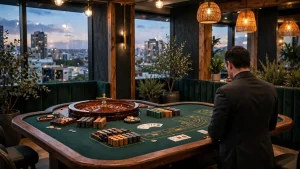
That is the practical answer to how the machine is played: locate it in a venue, check its displayed stake options, and make any decision based on those settings. Looking for an online copy is a different matter, not another way to access the same Australian product. Search results and third-party pages can use familiar branding while describing something else.
I have seen how easily the distinction gets blurred. “Play online” sounds like a format choice; here it can imply an availability that does not exist for real-money play in Australia. A label is not access.
This page is affiliate-linked and may contain sponsored recommendations. That disclosure does not change the availability of the game or endorse online gambling. Real-money gambling content is for adults aged 18 or over. Venue only.
Downloads and the Meaning of “Lightning Dollar Link”
A request for a Lightning Link download can suggest that the game exists as an app or computer file. In Australia, that is not how the original game is accessed: Lightning Link is designed for land-based venues and played on venue machines. It is not offered online for real money to Australian players. A file or website using the name does not change that distinction.

“Lightning Dollar Link” is not a separate official Australian download described by the game’s venue-based status. Similar wording may be used informally for the original title, or attached to a different product. I have learned to treat the name on a download button as a label, not proof of what is being installed. The details matter.
Some specialist game reviews describe online platforms with Hold and Spin mechanics resembling those in Lightning Link, from Aristocrat and other developers. Similar play does not make those titles the original game, nor does it establish that a real-money version of Lightning Link is available in Australia. A resemblance is not an identity.
The distinction is practical: the original is encountered on a physical machine in a venue; a downloadable product or online title is something else unless its identity can be established. I would not treat an unofficial file as an authorised route to the Australian venue game.
This page is affiliate-linked and may contain sponsored recommendations. That disclosure does not make prohibited online casino services available or endorsed. Real-money gambling content is for people aged 18 or older.

Lightning Link Games: What Varies Between Versions
The differences between Lightning Link versions are mainly in their paytables and bonus features, rather than in the name on the cabinet. A specialist review identifies Happy Lantern, Magic Pearl, Sahara Gold and High Stakes among the variants commonly discussed. That is a useful set of examples, not a guarantee that every venue will have each one.
I have found it more useful to compare the version’s rules on its own screen than to assume that familiarity with one title carries across the series. A changed paytable affects how symbol combinations are valued; altered bonus features change what can happen during a feature round. The theme may catch the eye first. The rules do the actual work.
There is no sound basis for treating one named version as automatically better. The relevant details are the displayed paytable and the feature rules for that particular game. Those are the points that distinguish the versions; a title alone does not explain them.
This is informational content from an affiliate-linked site and may contain sponsored recommendations. That disclosure does not change the status or availability of any game. In Australia, real-money online casino games are prohibited; Lightning Link is a venue game, not an online offer. Real-money gambling content is for people aged 18 or over.
Can I play Lightning Link for free online?
Yes, social-casino versions may offer Lightning Link-style play with virtual credits. Those credits cannot be won as cash or withdrawn.
Is it legal to play online pokies in Australia?
Operators are prohibited from supplying online casino-style games, including pokies, to people in Australia. The law targets operators rather than players, and there are no known cases of Australian players being prosecuted for playing on offshore sites.
What is the minimum bet for Lightning Link online pokies?
Minimum bets typically range from $0.20 to $1.00 per spin, depending on the variant and casino. Lightning Link itself is not offered for real-money online play to Australian players.