Casino, hotel, dining and facility searches are assessed against what the available information actually confirms.
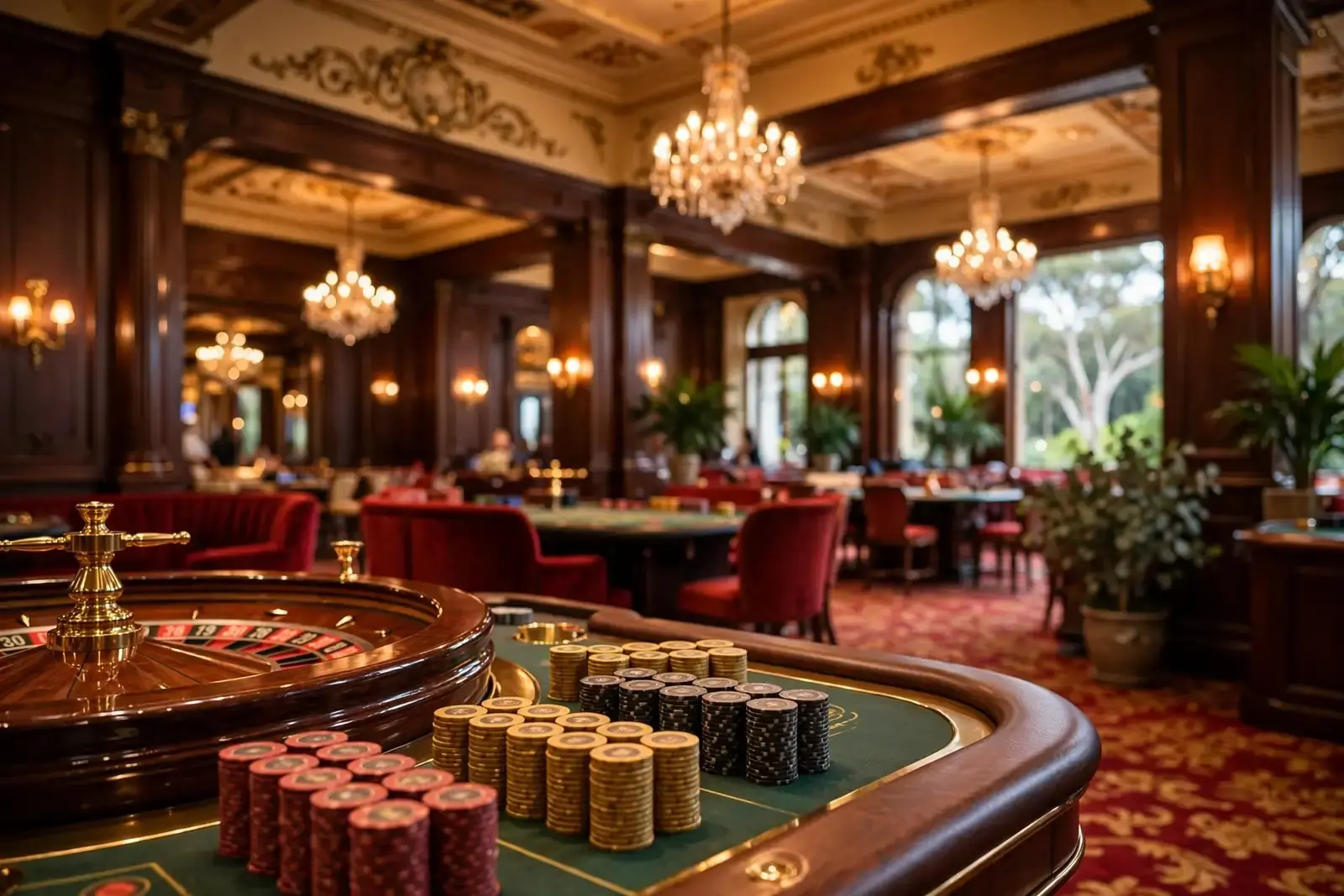
Hotel Searches: What the Available Information Can Confirm
A casino hotel sounds like a single product: a room attached to a gambling venue, perhaps sold with a deal or other inclusions. In practice, those are separate claims. A property may have accommodation, but that alone does not establish which rooms are available, what they contain or whether a room rate includes anything beyond the stay. The label needs a property-specific description behind it.
That distinction matters when comparing hotel options in Victoria. “Casino hotel” can refer to accommodation operated as part of a casino complex, but the phrase itself does not identify a particular property. A broad location phrase is not enough.
I have seen room copy do a lot of work with very little detail. “Luxury” is an advertising word; the useful information is the room category, what is actually included and the terms attached to the rate. None of those can be inferred from the word “casino”. Nor does a casino setting establish a view, a particular bed arrangement, access to facilities or any other room feature. Those details belong to the accommodation listing, not to the venue label.
Choosing an online casino from Victoria calls for checking the details that matter to you, including licensing and payment information. Use this list as a starting point and verify the operator’s terms and availability before signing up.
-
WinSpirit Casino
- License
- Curacao eGaming OGL/2024/923/0383 (Antillephone N.V.)
- Min. deposit
- A$30
WinSpirit Casino lists a Curacao eGaming licence, OGL/2024/923/0383, issued through Antillephone N.V. Its minimum deposit is A$30.
-
Golden Pokies
- License
- Curacao
Golden Pokies lists a Curacao licence. That licensing detail is the available point of reference for this operator.
-
Wild Tokyo
- License
- Curacao
- Payout speed
- crypto 30-60 minutes, fiat 1-5 days
- Min. deposit
- A$10
Wild Tokyo lists a Curacao licence and a minimum deposit of A$10. Its stated payout speeds are 30–60 minutes for crypto and 1–5 days for fiat.
-
MrPacho
- Payout speed
- crypto 30-120 minutes, fiat 24-72 hours
- Min. deposit
- A$30
MrPacho lists a minimum deposit of A$30. Its stated payout speeds are 30–120 minutes for crypto and 24–72 hours for fiat.
-
Bizzo Casino
- License
- Curacao Gaming Control Board (TechSolutions Group N.V.)
Bizzo Casino lists a licence from the Curacao Gaming Control Board, with TechSolutions Group N.V. named in the licensing details.
-
GoldenCrown
- License
- Curacao Gaming Control Board OGL/2023/176/0095 (Hollycorn N.V.)
GoldenCrown lists a Curacao Gaming Control Board licence, OGL/2023/176/0095, with Hollycorn N.V. named in the licensing details.
-
Vegaz Casino
- License
- Curacao OGL/2024/1335/0780
- Min. deposit
- EUR 20
Vegaz Casino lists a Curacao licence, OGL/2024/1335/0780. Its minimum deposit is EUR 20.
-
Thor Casino
- License
- Curacao – Antillephone N.V. (Versus Odds B.V.)
- Min. deposit
- EUR 20
Thor Casino lists a Curacao licence through Antillephone N.V., with Versus Odds B.V. also named in the details. Its minimum deposit is EUR 20.
-
Neospin
- License
- Curacao Gaming Control Board OGL/2023/176/0095 (Hollycorn N.V.)
Neospin lists a Curacao Gaming Control Board licence, OGL/2023/176/0095, with Hollycorn N.V. named in the licensing details.
-
SkyCrown
- License
- Tobique Gaming Commission
- Payout speed
- crypto ~10-15 minutes, fiat 1-5 days
- Min. deposit
- A$30
SkyCrown lists a Tobique Gaming Commission licence and a minimum deposit of A$30. Its stated payout speeds are about 10–15 minutes for crypto and 1–5 days for fiat.
Deals need the same care. A lower-looking rate is not meaningful without knowing what the price covers and what conditions apply. A promotion may have restrictions or exclusions; the word “deal” does not explain them. Better to leave the number out than dress an assumption up as a saving.
The question of whether a hotel is “at” a casino also deserves precision. On-site accommodation means lodging within the property or complex identified by the operator as part of it. A hotel elsewhere in the area is a different proposition, even if it is close enough to be marketed alongside a casino visit. Proximity does not turn a separate hotel into a casino hotel.
There is another distinction in the phrase “casino hotel in Victoria”: Victoria is a state, not a property name. A state-level description can narrow the general location, but it cannot do the work of a hotel listing. Before treating any accommodation as on-site, the property identity and its relationship to the casino would need to be clear. Otherwise, “Victoria casino hotel” remains a description of what someone hopes to find, not a confirmed room product.
Operating hours are separate again. Accommodation wording does not establish when a casino operates, and a hotel stay does not imply that every venue service is open at all times. Hours are time-sensitive venue information, not a room feature or a hotel deal. They should be treated as their own detail rather than folded into an accommodation assumption.

For a useful comparison, the basic questions are concrete: What is the property called? Is its accommodation explicitly part of the casino property? Which room category is being described? What does the quoted rate include, and what conditions apply? If those answers are not attached to a specific listing, a confident-sounding hotel description is still only a label.
That is the practical limit of the phrase “casino hotel”. It can express an accommodation preference, but it cannot establish a hotel name, room features or a price on its own. Keep the distinction clear. No borrowed certainty.
Poker and Gaming: The One Verified Detail
Poker searches can point to two quite different forms of play. One is poker played against other people at a table; the other is a poker machine, where a player uses an electronic game. The word “poker” joins them in a search result, but the experience, rules and venue arrangements are not interchangeable.
A specialist review reports that Crown Casino has over 3,500 poker machines. That is a specific claim about Crown, attributed to the kind of source that reported it; it is not a count for every Victorian casino, nor a description of a poker room. It also should not be mistaken for a live poker-table count. Different categories. Different question.
This distinction matters when assessing claims about a casino poker room in Victoria. A room suggests a dedicated space for table play, but the phrase alone does not establish that such a room is operating, what games it offers or how entry works. Poker tournaments are another separate matter: a tournament requires an event, with its own format and schedule. A reference to poker machines confirms neither a room nor a tournament.
According to a specialist review, Crown Casino has over 3,500 poker machines.
I have seen how promotional wording can blur these categories. “Poker action” may sound like a promise of live tables, when the details behind the phrase are not clear. The useful test is whether a statement specifies the kind of play. Machines, cash games and tournaments are not substitutes for one another. Marketing shorthand. Not a schedule.
For anyone comparing casino gaming in Victoria, the practical distinction is simple: a machine count tells something about electronic gaming, not about the availability of a particular card game or event. It gives a sense of the scale described by that review, but it cannot answer whether a room is open, whether a tournament is taking place, or what format it follows.
That is why “poker room” and “poker tournament” should be treated as requests for specific operational details, not as alternate names for poker machines. A room would need confirmation as a venue feature; a tournament would need confirmation as a scheduled event. Neither follows from the reported machine figure. The distinction is especially important when wording is broad enough to leave the type of poker unstated.
The same care applies to general claims about gaming at a casino. A large number attached to machines can be memorable, but it does not describe the whole gaming offer. It says nothing about table games, tournament frequency, entry conditions or current availability. Those details should not be inferred from one figure.
In plain terms, Crown Casino has been described by a specialist review as having over 3,500 poker machines. That is a reported, venue-specific figure—not evidence of a verified poker room or tournament. Keeping those meanings separate is the clearest way to read claims about poker and gaming in Victoria.
Buffet, Breakfast and Rewards Searches
Breakfast and buffet wording describes a different decision from choosing a restaurant. A breakfast search is about whether a meal is part of a morning visit or stay; a buffet search is about the meal format. Put together, the terms can suggest a combined offer, but the wording alone does not establish what is served, when it is available, or whether it is included in a room or resort package.

That distinction matters because promotional labels compress several conditions into one phrase. “Buffet breakfast” sounds complete, but the practical meaning depends on the venue’s own terms: which service the label covers, whether it is tied to a booking, and whether it applies on the intended date. Without those details, the phrase is a category, not a usable description of an offer. I have seen how quickly a broad headline can become a narrow entitlement once the conditions are read. The small print does the work.
The same applies to searches for a casino buffet. The word can refer to a dining format, but it does not establish that a buffet operates at a particular property or that it serves breakfast. Breakfast and buffet should not be treated as interchangeable: one identifies a meal occasion, the other a style of service. A claim that joins them needs to be supported by terms that join them too.
“Casino resort” is broader still. It can imply a property with several kinds of facilities or services, but the label itself does not define which are present or what is included. In commercial copy, “resort” often carries more weight than its operational detail. A careful comparison separates the name attached to a property from the specific service being considered. Otherwise, the word can create expectations that the actual booking terms never made.
Rewards searches need the same discipline. A rewards label does not, by itself, explain how membership works, what activity qualifies, whether benefits are available to every member, or how any benefit can be used. Those are separate terms, not natural consequences of the word “rewards.” The useful test is whether the programme explains eligibility and the conditions attached to each benefit in plain language. A glossy name is not a term.
I have found it helpful to read these labels as headings rather than promises. The heading signals the subject; the conditions define the transaction. That is especially important when a search combines a meal with a stay or a membership benefit. Each part may have its own conditions, and a bundled phrase does not prove that every part is included. Read the pieces separately.

Employment searches are a different category altogether. A phrase about casino jobs expresses interest in work, not evidence of a current vacancy or a particular role. It should not be read as an announcement. Job availability, duties and application arrangements belong to current recruitment information, not to dining or rewards descriptions.
For a Victoria casino visit, breakfast, buffet, resort and rewards language should therefore be treated as separate subjects until the relevant terms connect them. That keeps an attractive label from doing the work of a real description. Plain terms matter.
Victoria Casino Searches and the Legal Line
The phrase “casino in Victoria” can point to two different things: a physical casino operating under state oversight, or casino-style games offered online. The distinction matters. The same word does not mean the same service, and the rules do not treat the two settings alike.
Victoria’s casinos are monitored by the Victorian Commission for Gambling and Liquor Regulation. At the national level, the Interactive Gambling Act 2001 governs casino activity on Australian ground. For a land-based venue, that means the relevant question is not simply whether it uses the word “casino”, but how it is regulated in the state where it operates.
Online casino-style games sit on the other side of the line. The Act prohibits offering these games to Australian customers. That includes online slots, roulette, blackjack and poker. A website using a Victorian label, or presenting itself as an online casino for local players, does not change the rule. Location and the type of service matter more than the wording in a site name.
I have seen how easily those categories get blurred in promotional language. “Online casino” can sound like a digital extension of a physical venue. Legally, that is not a safe assumption. A land-based casino being monitored in Victoria does not mean that casino games may also be offered online to Australian customers. Separate channel. Separate treatment.
The word “bingo” can create another mismatch. It may appear alongside casino and online terms, but that combination alone says nothing reliable about what service is being offered or whether it is permitted. The legal line described here concerns online casino-style games; a label in a heading is not enough to classify a product. The activity and the way it is supplied matter.
Legal Prohibition
The Interactive Gambling Act 2001 prohibits offering online casino-style games, including slots, roulette, blackjack, and poker, to Australian customers.
Likewise, searches that combine casino dining or parking with online play mix practical venue questions with a legal one. Dining and parking are not evidence that an online gaming service is lawful, and an online result does not establish anything about the facilities of a physical casino. Those subjects need to be assessed separately. A category is not a credential.
That is why a request for the “best casino in Victoria in 2026” cannot be answered by blending every result that uses the word casino. A physical venue and an online gaming site are not interchangeable options. The former falls within Victoria’s monitored land-based framework; online casino-style games cannot legally be offered to Australian customers under the federal Act. A ranking that ignores this difference would be comparing unlike things.
In practice, the legal framework is less about the label on a page and more about the service being provided and where the customer is located. The Victorian regulator’s role concerns casinos in the state, while the Interactive Gambling Act sets the federal boundary for online casino-style games. Both points belong in the same explanation, but they should not be collapsed into one claim.
The short version is plain: land-based casinos in Victoria are monitored by the state regulator, while online casino-style games cannot be offered to Australian customers. Different setting. Different rule.
Accommodation Near a Casino
Accommodation near a casino is a different decision from booking a room within a casino property. The first is about the surrounding area and the journey between a place to stay and a venue; the second depends on rooms sold as part of the property itself. Mixing those two meanings can make a listing appear more relevant than it is.

“Near” is not a precise measure. A hotel or apartment may be described as close because of its map position, even when the practical route involves a longer walk or a separate trip. I have learned to treat the label as a starting point, not a travel plan. The useful comparison is the actual route: where it begins, where it ends, and how it can be covered at the times involved.
That distinction matters for casino accommodation in Victoria, where a broad location phrase can refer to different venues or areas. A result that mentions Victoria may not be in the same place as the intended casino. The venue’s exact location needs to be matched to the accommodation listing before distance claims mean much. Similar names do not settle the geography.
What an accommodation deal includes
A deal is only meaningful when its conditions are clear. The advertised rate may be attached to a particular room type, dates, or booking rules; the headline alone does not describe the full arrangement. Cancellation terms, payment timing, included services and any extra charges are the details that determine whether two offers are genuinely comparable.
I have seen the word “deal” do a lot of work while explaining very little. It can signal a lower displayed price without showing whether the booking is flexible or what is included. The label is marketing. The terms are the product.
It also helps to keep accommodation promotions separate from casino promotions. A room offer and a gambling incentive are not interchangeable, even when they appear together in the same search results. Each needs to be understood according to what is being offered and the conditions attached to it. A casino-related phrase beside a room listing does not, by itself, establish that the accommodation is operated by the casino.
Do
- Check the actual route between accommodation and venue
- Verify the total cost before confirming a reservation
- Review specific booking and cancellation terms
Don't
- Rely on a "nearby" label as a precise travel plan
- Assume a room deal includes gambling incentives
- Infer venue trading hours from a room listing
Planning around the stay
For a practical comparison, the important details are the accommodation’s location, the route to the venue, the booking conditions and the total cost shown before confirming a reservation. The journey can matter as much as the map distance: a short direct route and a route requiring additional transport are not equivalent simply because both listings use the word “nearby.”
Parking is a separate part of that calculation. A search for parking near a casino does not establish that a particular accommodation includes parking, nor that parking at or beside a venue is available. Those arrangements need to be checked against the accommodation’s own terms and the venue information, rather than inferred from a nearby label.
Likewise, a room advertised around a casino visit does not establish the venue’s trading hours, gaming facilities or location. Those are separate practical questions, and one listing cannot answer them by implication. I keep the decisions apart: choose accommodation on its own terms, then assess the journey and the venue independently.
That is less dramatic than a bundled promise. It is also clearer.
Contact, Bars and Other Venue Details
Contact details look simple until a listing is treated as an operating promise. A phone number may be intended for general enquiries, bookings, accessibility questions or a particular department; without a clear label, those purposes blur together. I have seen this distinction matter at the counter: a number that reaches a switchboard is not necessarily a direct line for a table, a gaming question or a lost-property matter. A listing should identify what its contact channel handles and avoid implying more than it can deliver. Small detail. Real consequence.
The same caution applies to a venue map. A pin can show a general location, while an internal map would need to identify entrances, levels and routes through the property. Those are different tools. Someone arranging a meeting, looking for a car park entrance or trying to reach a bar may need different directions, and a vague map label does not resolve that. I would treat a map as useful only when its purpose is clear; a location marker alone is not a floor plan.

A car park search is similarly practical, but the word itself does not settle access arrangements. It does not tell whether parking is available to visitors, where an entrance sits, what conditions apply or whether any particular route is suitable. Those are operational details, not assumptions that can be drawn from a venue name. In a well-maintained listing, parking information would be separated from the general address and would describe the relevant access terms plainly.
A bar search carries another kind of expectation. It may be about finding a place for a drink, meeting companions or understanding what is open as part of a visit. None of those intentions proves that a named venue has a bar, nor does the word “bar” confirm its service style or arrangements. Promotional language can make a facility sound self-explanatory; in practice, the details that matter are whether it exists, where it is, and what its current service information actually says.
Baccarat and craps are table-game terms, but their appearance in a venue search should not be read as confirmation that either game is offered at a particular property. A category label is not an operating schedule, and a search result is not a live floor plan. From an industry perspective, that distinction is basic: a game reference may describe a general interest, while availability depends on a venue’s own current arrangements. No inference should be made from the wording alone.
Concert searches need the same separation between interest and confirmation. A person may be trying to find entertainment connected with a casino visit, but that does not establish a concert programme, a venue space or ticketing arrangements. Dates and schedules can change, so only a current announcement from the relevant organiser would establish a particular performance. Without that, a broad label remains just a category.
The common thread across contacts, maps, parking, bars and entertainment is that a useful listing needs to state its scope. A phone number is not automatically a booking line; a map is not automatically a guide inside a building; and a facility or event should not be inferred from a search phrase. Precise wording beats implication.

Opening Hours, Events and Development Searches
Opening status is one of the least durable details attached to a casino. A venue can have a familiar name and a long operating history, but neither tells us whether it is open on a particular day, whether access is limited, or whether arrangements have changed. I treat “open” as a question about the present, not as a permanent feature of a place. An old listing or review cannot settle it.
The same caution applies to searches about reopening. The word can refer to a temporary closure, a planned return, or simply uncertainty about current operations. Those meanings are not interchangeable. Without a dated announcement from the venue or an appropriate official source, a reopening date should not be repeated as fact. Rumour travels faster than a confirmed timetable. That is the practical distinction.
Events, entertainment and employment
Event listings need a date and a clear connection to the venue. A general entertainment page may describe a past programme, while a search result can remain visible after the event has ended. I would not treat a headline, an undated calendar entry or a promotional snippet as proof that a concert or other event is currently scheduled. The useful details are the event itself, its date and whether the information comes from a source responsible for the booking.
Employment searches have a different purpose. A past job advertisement does not establish that recruitment is open now, and a general careers page does not confirm a particular vacancy. Job status changes with staffing needs; the title and conditions matter as much as the employer name. A current vacancy should be supported by a current listing from the organisation, rather than inferred from an old result.
Development and reviews
Development can mean a proposal, an approval, construction or a completed project. Those stages are often collapsed into a single headline, although they describe very different things. A reference to a possible development is not evidence that work has started; a rendering is not a timetable. I keep the wording tied to the stage actually confirmed, and leave out claims about plans, investment or completion when no reliable detail supports them.
A casino review also has a shelf life. Its observations may remain useful as an account of one visit, but they do not automatically describe current opening arrangements, events or employment. The date, subject and scope matter. “Current” is not a decoration. It is a claim that needs support.

Menu-related searches concern dining details rather than operating hours or development, so they require their own evidence and should not be filled in by assuming what a venue offers. Across all these topics, the dependable approach is narrow: distinguish an announcement from a completed change, a past event from a forthcoming one, and a review from a live update. If those distinctions are blurred, the wording may sound confident while saying very little.
Spa, Address and Dress-Code Queries
A casino’s name can make a practical detail look settled when it is not. “Victoria” may refer to the state, a venue name or a broad location, so an address search needs to identify the actual property before any directions or booking plans are treated as reliable. Similar names are easy to confuse. I have seen that small distinction create avoidable friction: the search result appears relevant, but the visitor and the venue are not necessarily talking about the same place.
An address is also more than a map pin. It should match the venue’s own current information, including the name used for the property. A third-party listing can be useful as a lead, not as a substitute for confirmation. If the venue cannot be identified clearly, assumptions about entrances, access or nearby facilities have no firm basis. Keep it simple.
Spa searches require the same discipline. A casino-related result, a hotel description or a promotional phrase does not by itself establish that a spa is part of the venue, what services it offers, or whether access is available to visitors. Those are separate operational details. A spa is not implied by a casino’s name, and it should not be treated as a confirmed feature unless the venue itself describes it.
Dress-code wording can be just as imprecise. Terms such as “smart casual” may sound definitive while leaving room for interpretation; a general description does not necessarily settle what is accepted at a particular entrance, event or gaming area. Dress requirements can also differ by venue or occasion. The practical distinction is between a published policy and an assumption based on photographs, reviews or the atmosphere a property advertises. Fine print matters.
The same applies to searches that combine a casino with careers, games or bars. Those topics do not establish an address, spa facility or dress requirement, and a venue’s broad description should not be stretched to answer a narrower question. Keeping the categories separate prevents one attractive claim from doing too much work.
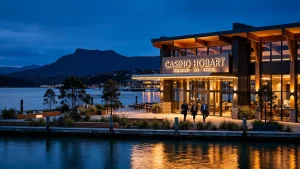
For a search about a casino in Victoria, the dependable sequence is to establish which venue is meant, then check that venue’s own current details for the specific practical point. If the information is not stated, it remains unconfirmed; it is not a cue to infer a spa, invent a dress rule or rely on a similarly named property. No guesswork.
Restaurant Searches Without Unverified Venue Claims
Restaurant information can look more settled than it is. A page may use a casino’s name beside the word “restaurant”, but that wording alone does not establish which dining venues operate there, where they are located or what they serve. I learned to treat the label as a starting point, not as proof of a particular offer.
There is also a difference between a restaurant associated with a casino and a restaurant inside its premises. Search wording often blurs those meanings. A result might refer to a nearby business, a broader entertainment precinct or a venue that has since changed. Without a confirmed location and current operating details, presenting such a result as an on-site restaurant would overstate what is known.

The same care applies to menus. A restaurant listing does not confirm dishes, service times, booking arrangements or whether a menu is current. Those details matter more than polished descriptions: “signature dining” is advertising language, not a useful account of what is available. Specifics need to be tied to a current venue listing or the restaurant’s own information. Otherwise, they remain claims.
A rooftop bar is a separate category from a restaurant, even when a venue combines food and drinks. The phrase can suggest a particular setting, but it does not prove that a rooftop bar exists at a casino in Victoria or that it serves meals. I would not fold that assumption into a restaurant recommendation. Different service, different claim.
For anyone comparing casino restaurants, the useful questions are practical: is the business clearly identified, is its location stated, and does its own current information describe the service being considered? These checks do not turn an uncertain listing into a confirmed one, but they prevent a broad casino label from doing more work than it should. A name, menu and location should agree.

“Victoria casino” can also be read as a casino in the state rather than a venue literally called Victoria Casino. That distinction is easy to miss when search wording is compressed. The restaurant information should identify the actual business, not rely on a phrase that could mean either.
I would rather leave a restaurant unnamed than attach a menu or location to a casino without a solid basis. A confident list can be less useful than a clear boundary between what is identified and what is merely implied. No invented certainty.
Food-Court and Pool Searches
Food-court searches point to a different kind of meal stop from a full-service restaurant. The phrase suggests a shared area with several counters, separate menus and a casual format; “food” on its own is broader and could mean anything from a quick snack to a sit-down meal. Those labels describe different expectations, not proof that a particular casino has either arrangement.

I have seen venue descriptions blur these categories. “Dining” can cover quite different experiences, while a food court has a more specific layout and service style. The distinction matters when planning a visit: a general reference to food does not establish a food-court setting, and a restaurant listing does not tell much about quick-service choices. Promotional wording can be roomy. The operating detail is what counts.
A casino pool is another separate amenity, not an extension of dining or gaming. In a resort context, the word may evoke leisure facilities, but it does not establish whether a pool exists, who can use it, or how access is arranged. Those are practical questions tied to the property’s own facilities and conditions. Without those details, “pool” remains a category of interest, not a confirmed feature.
This is why searches combining casino, food court and pool can lead to assumptions that the terms belong to one package. They do not. Each describes a separate facility, with its own operating arrangements. A venue’s broad resort language cannot fill in those specifics by itself.
For Victoria, the useful distinction is between the kind of amenity being sought and what a particular property actually provides. Food-court wording implies casual, counter-based choices; pool wording implies a leisure facility. Neither phrase, by itself, settles availability or access. Separate details matter.
Is online casino gambling legal in Victoria?
Australian-based online casinos cannot legally offer casino games to Victorian residents. Individual players are not generally committing an offence by using an offshore-licensed casino, but those sites are outside Victoria’s gambling regulatory system.
Are offshore casinos safe for Victorian players?
Offshore casinos are not regulated under Victoria’s gambling system, so players may have fewer protections if payment, account or complaint disputes arise.
Are crypto casinos legal in Australia in 2026?
Online casino-style games, including slots, roulette and blackjack, cannot legally be offered to Australian customers, regardless of whether a casino accepts cryptocurrency.
What online gambling options are legally available in Victoria?
Online sports betting and wagering on horse, harness and greyhound racing are allowed when supplied by operators licensed in Australia. Online casino games such as slots, roulette and blackjack cannot legally be offered to Australian players.
What is the legal gambling age in Victoria, Australia?
You must be at least 18 to gamble in Victoria, both online and in person.